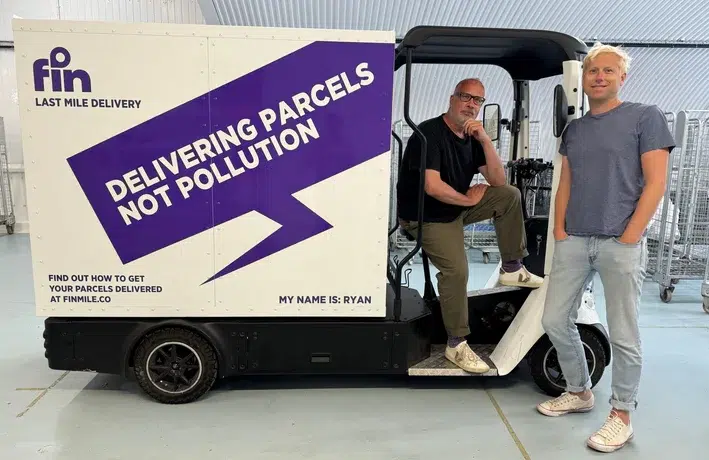
Urban logistics is undergoing a fundamental transformation. Congested streets, rising fuel costs, stricter emissions regulations, and increasing consumer demand for same-day deliveries are pushing logistics providers to rethink how goods move through cities. In the middle of this shift stands Fin Sustainable Logistics, a forward-thinking company redefining last-mile delivery through electric cargo bikes.
Once considered a niche or experimental solution, e-cargo bikes are rapidly becoming a mainstream logistics tool. Fin Sustainable Logistics is at the forefront of this change, demonstrating how sustainable transport can be commercially viable, operationally efficient, and environmentally responsible. As cities across Europe and the UK adapt to greener infrastructure, Fin’s model fits perfectly into the growing ecosystem of UK startups driving innovation in mobility, climate tech, and urban logistics.
This article explores Fin Sustainable Logistics’ mission, technology, business model, market opportunity, and why e-cargo bikes are about to become an everyday sight in cities everywhere.
The Last-Mile Delivery Problem
Last-mile delivery is the most expensive and polluting segment of the logistics chain. Traditional delivery vans face multiple challenges:
- Traffic congestion and unpredictable delivery times
- High fuel and maintenance costs
- Increasing low-emission and zero-emission zones
- Noise pollution and limited parking access
Urban authorities are tightening regulations, making it harder for diesel and petrol vehicles to operate freely. At the same time, e-commerce growth has exploded, placing even more pressure on last-mile logistics.
This is where UK startups like Fin Sustainable Logistics see opportunity instead of limitation.
Who Is Fin Sustainable Logistics?
Fin Sustainable Logistics is a sustainable delivery company specialising in electric cargo bike fleets for urban logistics. Rather than competing directly with traditional courier companies, Fin positions itself as a partner for retailers, logistics firms, food platforms, and local businesses seeking cleaner delivery alternatives.
Fin’s vision is simple but powerful:
replace polluting delivery vans in dense urban areas with zero-emission, high-capacity e-cargo bikes.
Like many successful UK startups, Fin focuses on solving a real-world problem using practical innovation rather than speculative technology.
What Are E-Cargo Bikes—and Why Do They Matter?
E-cargo bikes are electrically assisted bicycles designed to carry heavy loads—often up to 200–250 kg—using reinforced frames and modular cargo boxes.
Key Advantages of E-Cargo Bikes
- Zero tailpipe emissions
- Faster delivery in congested areas
- Lower operating and maintenance costs
- Access to pedestrian zones and cycle lanes
- Reduced noise pollution
Fin Sustainable Logistics leverages these benefits at scale, turning what was once a small-scale eco solution into a reliable logistics infrastructure.
This shift mirrors broader trends seen across UK startups working on sustainable mobility and smart cities.
Fin’s Operating Model
1. Micro-Hubs Instead of Warehouses
Fin operates through strategically placed micro-distribution hubs located close to city centres. Goods arrive at these hubs via larger vehicles during off-peak hours, then get distributed by e-cargo bikes.
This model dramatically reduces congestion and delivery time.
2. Fleet-as-a-Service
Rather than selling bikes, Fin provides a full logistics service:
- Vehicles
- Riders
- Maintenance
- Routing software
- Real-time tracking
This service-based approach is common among high-growth UK startups, allowing clients to adopt sustainability without upfront capital costs.
3. Technology-Driven Operations
Fin uses route optimisation software and delivery analytics to ensure efficiency comparable—or superior—to traditional van deliveries.
Why Cities Are Embracing Fin’s Model
Across the UK and Europe, cities are redesigning streets to prioritise clean transport. Low-traffic neighbourhoods, congestion charges, and zero-emission zones are becoming the norm.
Fin Sustainable Logistics aligns perfectly with these policies. City councils increasingly support partnerships with UK startups that reduce emissions while maintaining economic activity.
E-cargo bikes can:
- Park closer to destinations
- Avoid traffic bottlenecks
- Operate during restricted hours
This makes them ideal for dense urban environments.
Commercial Viability: Sustainability That Makes Sense
One of the biggest myths about green logistics is that it’s expensive. Fin challenges this assumption.
Lower Costs Over Time
- No fuel costs
- Minimal maintenance compared to vans
- Lower insurance premiums
- No congestion or emission charges
For many delivery routes under 5 km, e-cargo bikes are not just greener—they’re cheaper.
This cost advantage is why logistics partners increasingly look toward UK startups like Fin to future-proof their operations.
Use Cases and Industries Served
Fin Sustainable Logistics serves multiple sectors:
Retail and E-Commerce
Local retailers and online stores use Fin for same-day and next-day deliveries.
Food and Grocery
From restaurant supply chains to grocery platforms, e-cargo bikes ensure fresh goods reach customers quickly.
Pharmaceuticals
Quiet, reliable, and fast—ideal for medical deliveries in city centres.
Corporate and Office Logistics
Document transfers, equipment delivery, and internal mail.
These diversified use cases strengthen Fin’s resilience and mirror the adaptability seen across successful UK startups.
Environmental Impact
The environmental benefits of Fin’s model are substantial.
- Each e-cargo bike replaces up to one delivery van
- CO₂ emissions reduced by tonnes annually per fleet
- Improved air quality in urban areas
- Reduced noise pollution
As sustainability reporting becomes mandatory for many companies, partnering with eco-focused UK startups like Fin helps businesses meet ESG targets.
Challenges in Scaling E-Cargo Logistics
While promising, the model is not without challenges:
- Infrastructure gaps in some cities
- Weather dependency
- Rider recruitment and training
- Load limitations for certain goods
Fin addresses these issues through careful route planning, weather-resilient equipment, and ongoing investment in rider welfare—an approach increasingly common among mature UK startups.
The Competitive Landscape
Fin Sustainable Logistics operates in a growing market that includes logistics firms, mobility platforms, and other green delivery providers. However, Fin differentiates itself by:
- Focusing exclusively on sustainable urban delivery
- Operating its own fleets
- Building strong local partnerships
This focused strategy reflects lessons learned from other high-performing UK startups that prioritise depth over breadth in early growth stages.
Why You’ll See E-Cargo Bikes Everywhere Soon
Several trends are converging:
- Urbanisation – More people living in cities
- Regulation – Tighter emission laws
- Consumer Behaviour – Demand for fast, eco-friendly delivery
- Technology – Better batteries and logistics software
Fin Sustainable Logistics sits at the intersection of all four. As more UK startups prove that sustainability and profitability can coexist, e-cargo bikes will become a normal part of urban life.
Fin and the Future of Sustainable Logistics
Looking ahead, Fin plans to:
- Expand into more UK and European cities
- Increase fleet size
- Integrate AI-based route optimisation
- Collaborate with city planners
This long-term vision positions Fin as more than a delivery company—it is part of the infrastructure of future cities, much like other influential UK startups shaping transport, energy, and urban living.
Conclusion: A Smarter Way to Move Cities
Fin Sustainable Logistics represents a shift in how we think about movement, efficiency, and responsibility. By replacing vans with e-cargo bikes, Fin proves that sustainability doesn’t have to be disruptive—it can be seamless.
As cities evolve and climate priorities intensify, solutions from innovative UK startups like Fin will define the next generation of logistics. The e-cargo bikes you’re starting to notice today are not a trend—they’re a permanent upgrade to urban life.
And very soon, seeing a Fin e-cargo bike on your street won’t feel innovative at all—it will feel normal.