The debate over the future of data centres has taken a futuristic turn, with space emerging as the latest frontier in the global race for artificial intelligence infrastructure. As AI models become larger and more computationally demanding, industry leaders are exploring unconventional solutions to power and scale next-generation systems.
Recently, the discussion intensified when Sam Altman, CEO of OpenAI, expressed skepticism about the idea of space-based data centres becoming relevant anytime soon. His comments contrast sharply with the long-term space ambitions of Elon Musk, whose company SpaceX continues to push the boundaries of space technology.
At the heart of this debate lies a key question: Will space-based infrastructure meaningfully transform AI computing within the next decade?
The Growing Pressure on Data Centres
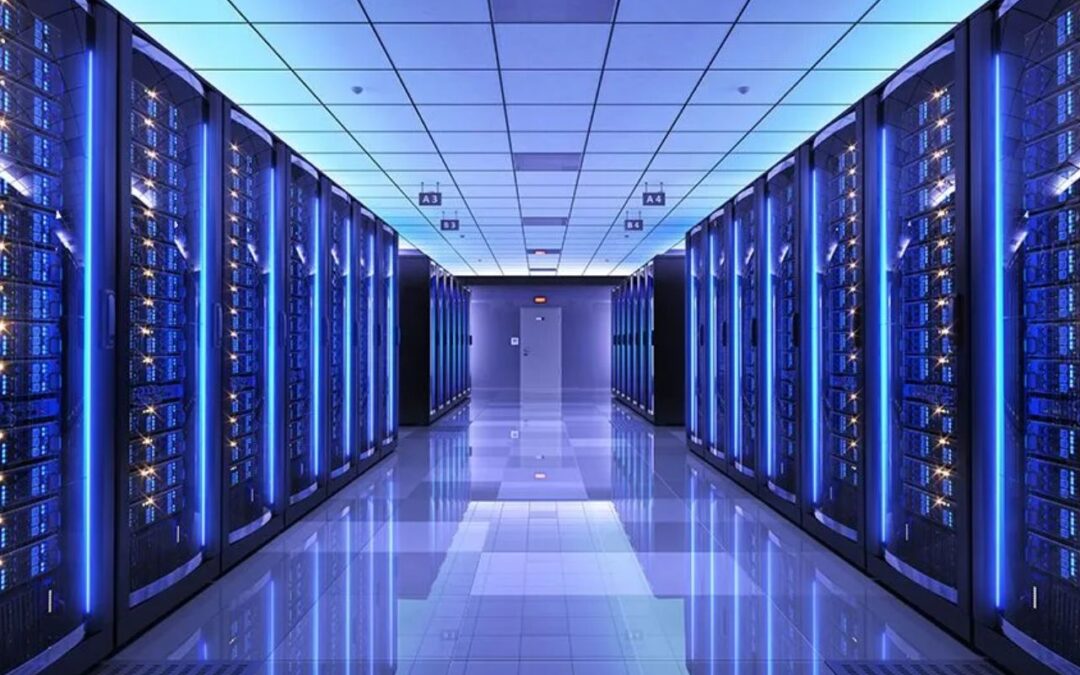
Artificial intelligence systems today require massive computational resources. Training advanced AI models demands enormous processing power, electricity, cooling systems, and specialized hardware such as GPUs. As companies race to build larger and more capable AI systems, the demand for efficient and scalable data centres is surging globally.
Traditional data centres already consume vast amounts of energy. Governments and environmental groups have raised concerns about carbon emissions, water usage for cooling, and strain on local power grids. This has prompted some technologists to imagine a radical alternative: building data centres in space, where solar energy is abundant and cooling could theoretically be easier due to the vacuum environment.
However, Sam Altman believes that while the concept is imaginative, it is not practical in the near term.
Sam Altman’s Practical Perspective
According to Altman, the idea of deploying space-based data centres faces overwhelming logistical and economic hurdles. Launching hardware into orbit remains expensive, even with reusable rockets. While companies like SpaceX have reduced launch costs significantly, sending massive computing infrastructure into space would require extraordinary capital investment.
Altman argues that terrestrial solutions still offer better returns. Advances in semiconductor design, improved energy efficiency, renewable energy integration, and modular data centres are likely to solve many current bottlenecks without needing to leave Earth.
In his view, AI progress this decade will depend more on breakthroughs in chip architecture and power management than on relocating infrastructure to orbit.
Elon Musk’s Space Vision
Elon Musk, known for his ambitious long-term projects, has consistently emphasized the importance of becoming a multi-planetary species. Through SpaceX, Musk aims to reduce the cost of space travel and enable large-scale operations beyond Earth.
While Musk has not formally announced a concrete plan to build orbital data centres, the concept aligns with his broader vision of space-based infrastructure. The idea suggests that satellites or orbital platforms powered by solar arrays could host AI workloads, potentially reducing dependence on Earth-bound power grids.
Proponents of space-based data centres argue that unlimited solar energy and natural heat dissipation could make such systems efficient in the long run. However, critics point to latency issues, maintenance challenges, radiation exposure risks, and enormous upfront costs.
Technical Barriers to Space-Based Data Centres
Even if launch costs decline further, several technical challenges remain:
- Hardware Durability – Space environments expose equipment to radiation, extreme temperatures, and micrometeoroids. Standard server components are not designed for such conditions.
- Maintenance and Repairs – On Earth, malfunctioning hardware can be replaced quickly. In orbit, repairs would require costly missions.
- Latency Concerns – AI workloads often require low-latency connections. Sending data back and forth between Earth and orbit could create performance delays.
- Capital Investment – Building and deploying large-scale orbital infrastructure would demand unprecedented financial commitment.
Altman’s argument centers on these realities. While space-based data centres may one day become viable, they are unlikely to influence mainstream AI infrastructure in the next ten years.
Earth-Based Innovation Is Accelerating
Meanwhile, innovation on Earth is moving rapidly. Companies are investing billions into next-generation data centres powered by renewable energy sources such as solar, wind, and hydroelectric power. Liquid cooling technologies are improving efficiency, and AI chips are becoming more energy-optimized.
In addition, modular and distributed data centres are being developed closer to end users to reduce latency and energy waste. Governments are also offering incentives for sustainable infrastructure, accelerating green innovation.
Altman appears confident that terrestrial technological progress will outpace the need for orbital experimentation during this decade.
AI Infrastructure Race Intensifies
The rivalry between Sam Altman and Elon Musk is layered with history. Musk was one of the early backers of OpenAI before later distancing himself from the organization. Today, both figures are central to the global AI conversation, albeit with different approaches.
Altman focuses on accelerating AI capabilities through research, partnerships, and massive computing investments. Musk, on the other hand, combines AI development with space exploration and long-term civilizational planning.
The disagreement over space-based data centres reflects their contrasting philosophies: pragmatic scaling versus visionary expansion.
The Decade Ahead
Over the next ten years, AI growth is expected to reshape industries ranging from healthcare to finance. The demand for high-performance data centres will continue to rise sharply. However, the infrastructure supporting this growth will likely remain Earth-bound.
Sam Altman’s position is not a dismissal of space innovation but a statement about timing. The economics, engineering constraints, and opportunity costs make orbital data centres unlikely to play a meaningful role this decade.
That said, if launch costs fall dramatically and space infrastructure matures, the conversation could change in the 2030s or beyond.
Conclusion
The debate between Sam Altman and Elon Musk highlights a broader question about how humanity should scale the infrastructure behind artificial intelligence. While space-based data centres capture imagination, current realities favor practical, ground-based solutions.
For now, AI’s future appears firmly rooted on Earth — powered by evolving data centres, cleaner energy, and smarter chips. The dream of orbital computing may remain on the horizon, but according to Altman, it won’t define this decade.
As AI continues to expand at unprecedented speed, the world will watch closely to see whether pragmatism or vision ultimately shapes the next chapter of technological infrastructure.