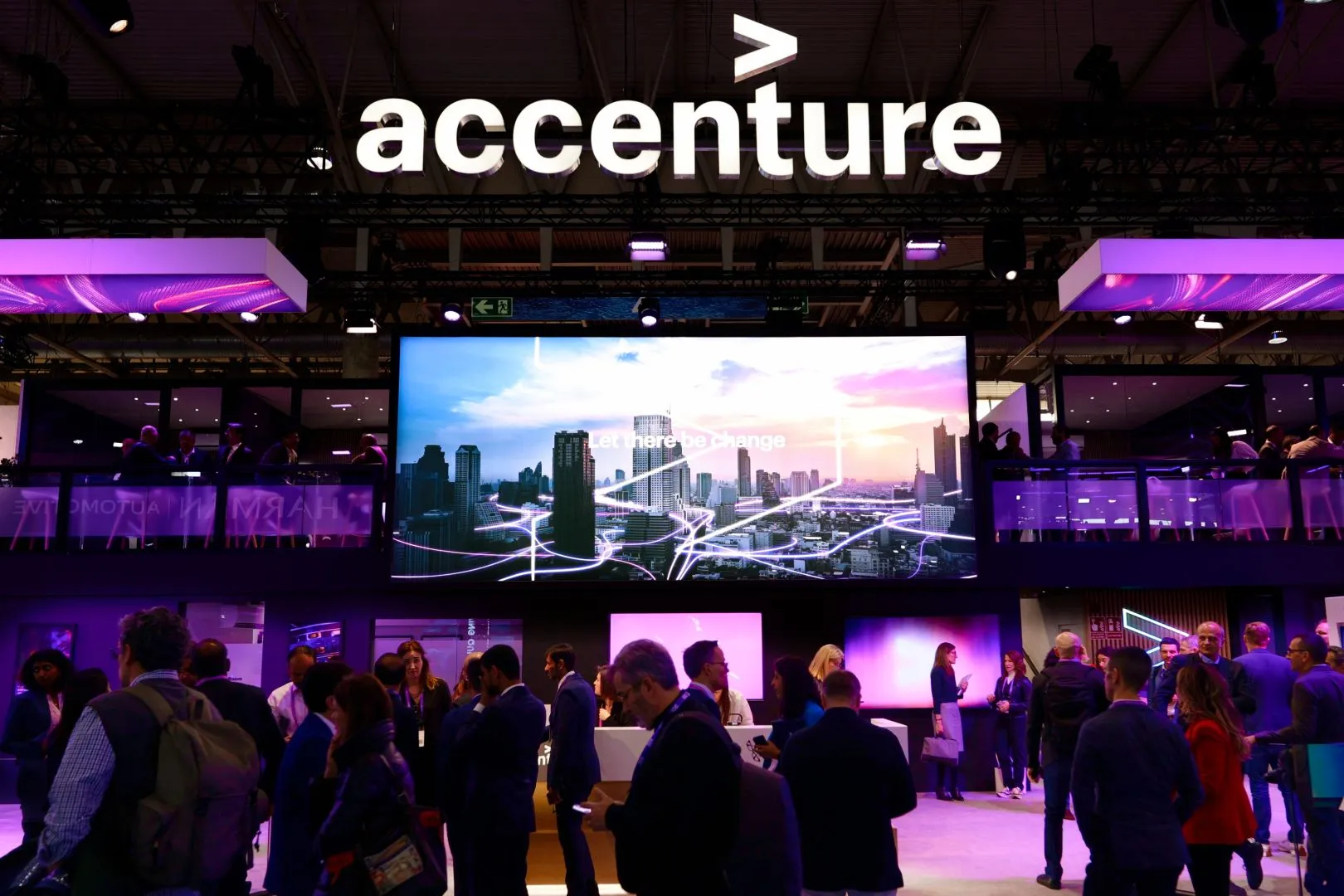
The global consulting industry is undergoing a dramatic shift as artificial intelligence reshapes how businesses operate. One of the biggest signals of this transformation comes from accenture, which has reportedly begun tracking how its employees use artificial intelligence tools in their daily work. The message is clear: AI adoption is no longer optional. In fact, career progression may depend on it.
The headline “Accenture Is Tracking Whether Employees Use AI—And Promotions Are on the Line” reflects a broader corporate trend. Organizations across industries are investing billions in generative AI, automation systems, and digital transformation strategies. But technology alone cannot drive results. Companies now want to ensure that their workforce is actively embracing these tools.
Why Accenture Is Emphasizing AI Usage
Accenture is one of the world’s largest professional services companies, offering consulting, technology, and outsourcing services to clients in more than 120 countries. As a firm that advises other corporations on digital innovation, it must also lead by example.
Artificial intelligence has become central to Accenture’s long-term strategy. From predictive analytics to generative AI models that assist with coding, marketing content, and business analysis, the company has integrated AI into multiple layers of its operations.
By tracking AI usage among employees, Accenture aims to:
- Increase productivity and efficiency
- Encourage innovation in client solutions
- Ensure workforce adaptability
- Justify its large AI investments
- Maintain competitive advantage in the consulting market
This move signals a cultural shift. Instead of simply offering AI tools as optional resources, the company appears to be embedding AI proficiency into performance expectations.
Promotions Tied to AI Adoption
The idea that promotions may depend on AI usage highlights how seriously companies are treating digital transformation. Traditionally, performance reviews focused on leadership skills, revenue generation, teamwork, and technical expertise. Now, digital fluency—especially AI literacy—is becoming a measurable factor.
If employees fail to adapt, they risk falling behind peers who use AI to enhance productivity and deliver faster results. In consulting, where efficiency and innovation directly impact client satisfaction, AI-enabled professionals may gain a significant edge.
This strategy also reflects a broader shift in workforce evaluation. Employers increasingly value individuals who can:
- Use AI tools responsibly and effectively
- Combine human creativity with machine intelligence
- Automate repetitive processes
- Extract insights from AI-generated data
- Improve decision-making through analytics
In this context, “Accenture Is Tracking Whether Employees Use AI—And Promotions Are on the Line” is more than a headline—it is a reflection of how modern corporate metrics are evolving.
The Rise of AI Accountability in the Workplace
Many global organizations are currently experimenting with generative AI platforms like chatbots, automated coding assistants, and data-analysis systems. However, simply giving employees access does not guarantee meaningful adoption.
By tracking usage, Accenture can measure:
- Frequency of AI tool engagement
- Business impact of AI-driven work
- Efficiency improvements
- Learning curve and training outcomes
This data-driven approach aligns with how consulting firms operate. Decisions are based on measurable performance indicators. If AI boosts productivity by a certain percentage, leadership will want evidence.
However, this approach may also raise concerns among employees regarding privacy, pressure, and fairness.
Employee Concerns and Ethical Questions
While some professionals welcome AI tools as productivity enhancers, others may feel anxious about increased monitoring. Questions that naturally arise include:
- How is AI usage being measured?
- Does quantity matter more than quality?
- Will employees feel pressured to use AI unnecessarily?
- Could this discourage creative or independent thinking?
Transparency will be crucial. If tracking mechanisms are clear and evaluation criteria are well communicated, employees may view the initiative as skill development rather than surveillance.
Companies must also ensure that AI use aligns with ethical guidelines, especially when dealing with client data, intellectual property, and confidential information.
The Competitive Pressure in Consulting
The consulting industry is highly competitive. Firms are racing to position themselves as leaders in AI transformation services. When clients hire consultants, they expect cutting-edge expertise.
By encouraging AI integration internally, Accenture strengthens its brand as a forward-thinking organization. Employees who master AI tools can deliver:
- Faster project timelines
- More accurate forecasting models
- Automated reporting systems
- AI-powered client recommendations
This enhances client satisfaction and revenue growth, creating a direct link between AI adoption and business success.
AI Skills as the New Career Currency
Across industries, AI literacy is quickly becoming a valuable professional skill. From finance to marketing to healthcare, AI-driven processes are transforming traditional roles.
Employees who invest time in learning generative AI tools, prompt engineering, automation workflows, and data interpretation may find themselves more marketable. For younger professionals, this presents an opportunity to stand out.
In this evolving environment, Accenture’s tracking system may actually encourage workforce upskilling. Rather than resisting AI, employees are incentivized to embrace it.
Long-Term Implications for the Corporate World
The headline “Accenture Is Tracking Whether Employees Use AI—And Promotions Are on the Line” may soon apply to many other companies. As AI adoption becomes mainstream, organizations will likely:
- Include AI metrics in performance reviews
- Offer mandatory AI training programs
- Develop internal AI certification systems
- Tie bonuses or promotions to digital competency
This reflects a structural change in corporate culture. Just as computer literacy became essential in the early 2000s, AI literacy may become mandatory in the next decade.
Balancing Human Talent and Artificial Intelligence
Despite the excitement around automation, human skills remain irreplaceable. Creativity, empathy, leadership, and ethical judgment cannot be fully replicated by machines.
The most successful professionals will likely be those who combine:
- Strategic thinking
- Emotional intelligence
- AI-enhanced productivity
- Data-driven decision-making
Accenture’s move suggests that the future workplace will not replace humans with AI—but rather reward humans who effectively collaborate with AI.
Final Thoughts
The story that accenture is tracking employee AI usage and linking it to career growth reflects a major turning point in corporate strategy. Artificial intelligence is no longer a futuristic experiment; it is a measurable performance factor.
For employees, this serves as both a warning and an opportunity. Those who adapt and master AI tools may unlock faster career advancement. Those who resist change may struggle to compete.
“Accenture Is Tracking Whether Employees Use AI—And Promotions Are on the Line” captures a defining moment in modern business evolution—where technology adoption directly shapes professional success.