
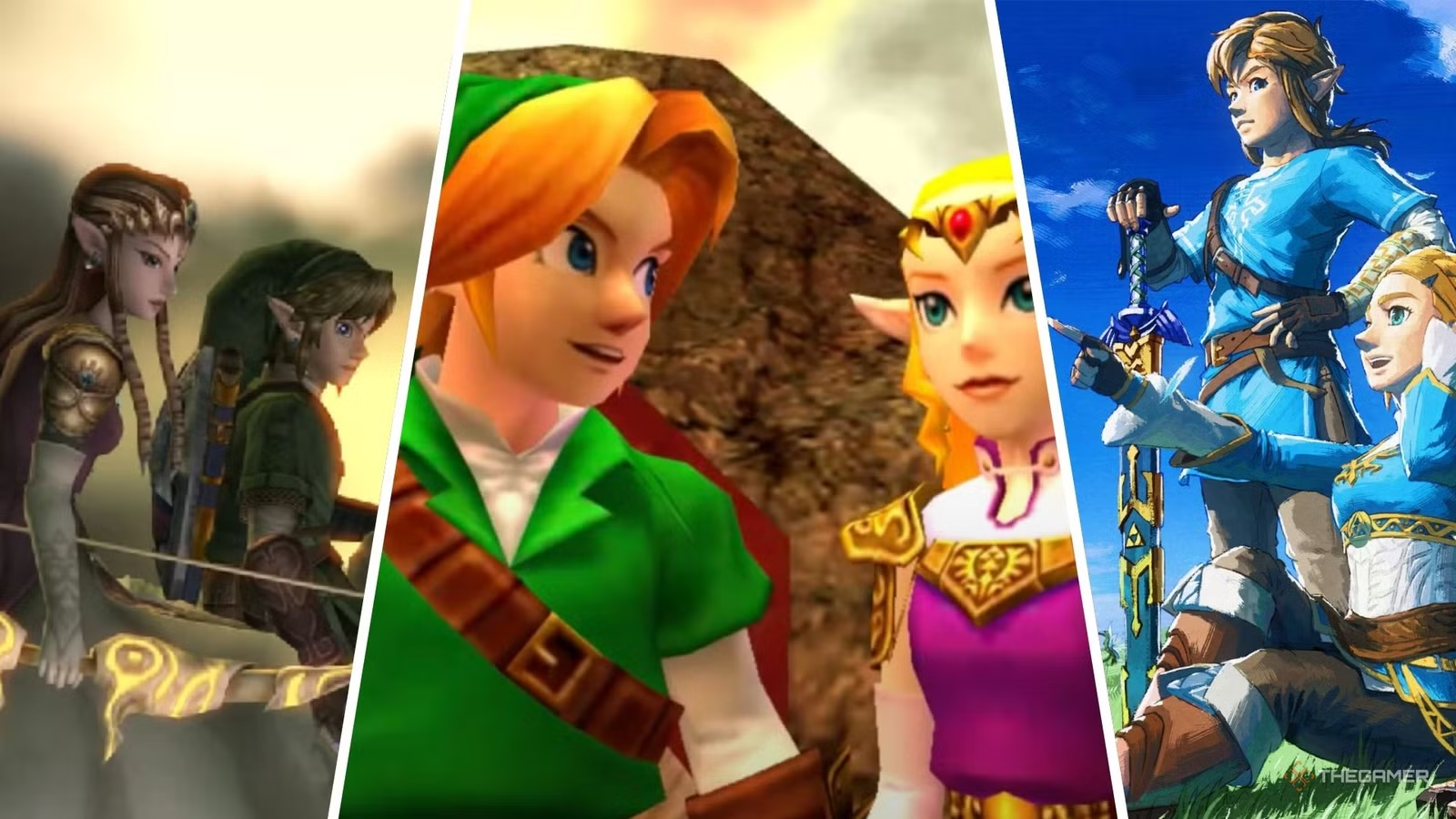
In 2026, the legendary Zelda saga reaches an extraordinary milestone: 40 years of adventure, innovation, and timeless storytelling. Since its debut in 1986, The Legend of Zelda franchise has shaped the gaming industry and inspired generations of players. From 8-bit beginnings to sprawling open worlds, the series has remained one of the most influential properties in interactive entertainment.
As fans celebrate four decades of heroism, puzzles, and epic quests, it’s worth reflecting on how this iconic series became a global phenomenon and why it continues to define excellence in gaming.
The Birth of a Legend
The journey began in 1986 with the release of The Legend of Zelda, developed and published by Nintendo. Created by legendary game designer Shigeru Miyamoto, the original title introduced players to the kingdom of Hyrule, where they controlled the courageous hero Link on a quest to rescue Princess Zelda and defeat the villain Ganon.
Unlike many games of its era, the first Zelda title emphasized exploration over linear progression. Players were free to roam, discover hidden secrets, and tackle dungeons in different orders. This open-ended design was groundbreaking at the time and laid the foundation for future adventure games.
Redefining Adventure Games
Over the next decade, Zelda evolved rapidly. In 1998, the release of The Legend of Zelda: Ocarina of Time on the Nintendo 64 revolutionized 3D gaming. It introduced lock-on targeting, cinematic storytelling, and immersive world-building that set new standards for action-adventure titles.
Many critics and players still regard Ocarina of Time as one of the greatest video games ever made. Its emotional narrative, memorable soundtrack, and innovative gameplay mechanics elevated Zelda to a new level of prestige.
The franchise continued to experiment with visual styles and gameplay systems in titles like The Legend of Zelda: The Wind Waker, which featured cel-shaded graphics, and The Legend of Zelda: Twilight Princess, which offered a darker, more mature tone.
The Open-World Revolution
The most transformative era for Zelda arrived in 2017 with The Legend of Zelda: Breath of the Wild. Released alongside the Nintendo Switch, the game reimagined the series with a fully open-world design. Players could climb mountains, glide across vast landscapes, and solve challenges in countless creative ways.
This bold shift redefined what Zelda could be. Rather than guiding players along a strict path, the game encouraged experimentation and freedom. Its success not only revitalized the franchise but also influenced the broader gaming industry’s approach to open-world design.
The momentum continued with The Legend of Zelda: Tears of the Kingdom, which expanded the world vertically and introduced new mechanics that further enhanced creativity and exploration.
A Cultural Icon
As the Zelda franchise celebrates its 40th anniversary, its cultural impact extends far beyond video games. The series has inspired orchestral concerts, merchandise, fan art, and academic discussions about interactive storytelling. Iconic elements like the Master Sword, the Triforce, and the melodies composed by Koji Kondo have become embedded in pop culture.
The character of Link remains one of gaming’s most recognizable heroes, embodying courage and resilience without relying heavily on dialogue. Princess Zelda herself has evolved from a damsel-in-distress archetype into a complex and powerful character in modern installments.
Innovation as a Core Philosophy
One of the reasons Zelda has endured for four decades is its willingness to innovate. Each major installment introduces new mechanics while preserving the series’ core themes: exploration, puzzle-solving, and a sense of wonder.
Nintendo has consistently taken creative risks with the franchise, whether through art style changes, gameplay experimentation, or hardware integration. This balance between tradition and innovation has kept Zelda fresh for both longtime fans and newcomers.
The Future of Zelda
With 40 years behind it, the Zelda franchise shows no signs of slowing down. Advances in technology promise even more immersive worlds, enhanced storytelling, and deeper interactivity. As gaming platforms evolve, Zelda is likely to remain at the forefront of design innovation.
The 40th anniversary is more than a celebration of longevity—it’s a testament to the franchise’s ability to adapt and inspire. From pixelated beginnings to expansive open worlds, Zelda has consistently reminded players that adventure awaits just beyond the horizon.
Conclusion
“The Legend of Zelda franchise celebrates its 40th anniversary” is not just a headline—it is a celebration of creativity, imagination, and enduring excellence. For four decades, Zelda has set the gold standard for adventure games, influencing developers and captivating players around the world.
As fans look ahead to the next chapter in Hyrule’s story, one thing is certain: the legend is far from over.