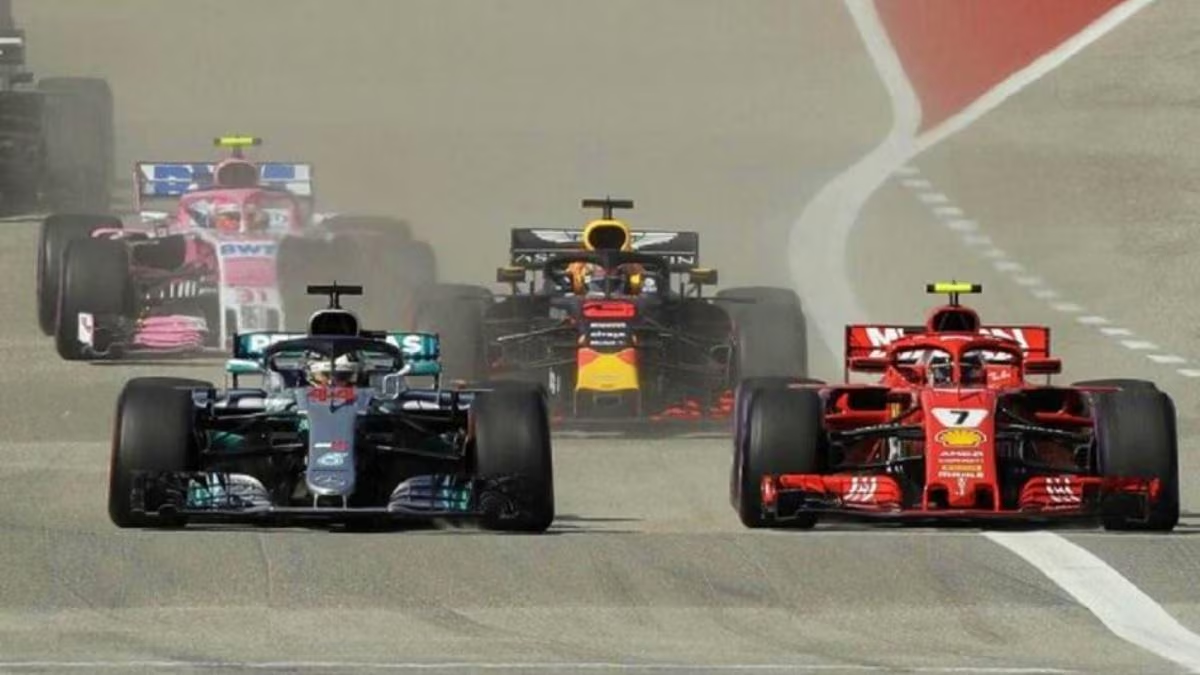
India could once again hear the roar of Formula 1 engines if plans discussed by the Adani Group move forward. In a recent statement, Karan Adani indicated that the conglomerate is exploring possibilities to bring Formula 1 back to Greater Noida, reviving hopes of restoring the country’s presence on the global motorsport calendar.
The development has reignited excitement among racing fans, investors, and policymakers who remember the brief but impactful stint of Formula 1 in India during the early 2010s. If successful, the initiative could mark a significant milestone for Indian motorsport and position Greater Noida as a global sporting hub once again.
A Look Back: Formula 1’s First Run in India
India previously hosted three editions of the Indian Grand Prix at the Buddh International Circuit between 2011 and 2013. The circuit, known for its fast straights and technical corners, earned praise from drivers and teams across the paddock. The inaugural race in 2011 was won by Sebastian Vettel, who went on to dominate the early years of the event.
Despite the enthusiastic crowds and international attention, Formula 1 in India faced administrative and taxation challenges. The sport was categorized as entertainment rather than a sporting event, leading to logistical complications and financial hurdles. As a result, the Indian Grand Prix was discontinued after 2013.
Since then, motorsport enthusiasts have consistently called for the return of Formula 1, citing India’s massive market potential and growing appetite for global sporting events.
Adani Group’s Interest in Reviving Formula 1
Karan Adani’s remarks suggest that the Adani Group is evaluating the feasibility of bringing Formula 1 back to Greater Noida. While detailed plans have not yet been disclosed, the intent signals a serious effort to explore infrastructure, regulatory, and commercial aspects required to host a race of such scale.
The Adani Group, known for its large-scale infrastructure, logistics, and energy projects, has the financial muscle and operational expertise to support a global event like Formula 1. Reviving the race would involve collaboration with Formula One Management, government authorities, and international stakeholders.
A return of Formula 1 to Greater Noida would likely require updated agreements, tax clarity, and long-term commitments to ensure sustainability—lessons learned from the sport’s previous stint in the country.
Why Formula 1’s Return Matters for India
The global footprint of Formula 1 has expanded significantly in recent years, with new races added across the Middle East, North America, and Asia. Under the leadership of Stefano Domenicali, the sport has focused on entering emerging markets and enhancing fan engagement.
India represents a massive untapped opportunity for Formula 1. With a population exceeding 1.4 billion and a rapidly growing middle class, the commercial potential is immense. Television viewership and digital streaming numbers for Formula 1 in India have steadily increased, especially among younger audiences.
Moreover, global brands see India as a key growth market. Hosting a Formula 1 race could attract international sponsors, boost tourism, and create jobs across hospitality, logistics, and event management sectors.
Economic and Infrastructure Impact
If Formula 1 returns to Greater Noida, the economic ripple effect could be substantial. Major sporting events generate revenue through ticket sales, broadcasting rights, sponsorships, and tourism. Hotels, airlines, restaurants, and local businesses benefit significantly during race weekends.
The Budd International Circuit already exists, which reduces the need for building new infrastructure from scratch. However, upgrades and modernization would likely be required to meet current Formula 1 standards. These improvements could also support other international motorsport and entertainment events.
In addition, the revival could enhance India’s image as a capable host of world-class sporting events, aligning with the country’s broader ambitions to attract global investments and showcase its infrastructure capabilities.
Challenges Ahead
While optimism surrounds the potential return of Formula 1, challenges remain. Securing a slot on the packed global calendar is competitive. The sport currently hosts over 20 races annually, and several countries are vying for long-term contracts.
Financial viability is another critical factor. Hosting fees for Formula 1 races are substantial, and organizers must ensure strong corporate sponsorship and government backing. Clear taxation policies and streamlined regulatory processes will be essential to avoid past obstacles.
Furthermore, sustainability has become a core focus for Formula 1, which aims to achieve net-zero carbon emissions by 2030. Any future Indian Grand Prix would need to align with these environmental goals.
Growing Popularity of Formula 1 in India
The popularity of Formula 1 in India has surged in recent years, partly due to digital streaming platforms and social media engagement. Young fans are increasingly following teams and drivers such as Lewis Hamilton and Max Verstappen.
The success of motorsport content, esports competitions, and Formula 1-themed events indicates a maturing fan base. Brands and advertisers are also recognizing the marketing value of associating with Formula 1 in India.
If the Adani Group’s plans materialize, the return of Formula 1 could tap into this growing enthusiasm and build a long-term motorsport ecosystem in the country.
The Road Ahead
At this stage, discussions about restarting Formula 1 in Greater Noida remain exploratory. However, Karan Adani’s statement signals serious intent from one of India’s largest conglomerates. Bringing Formula 1 back would require coordination between private stakeholders, government authorities, and global motorsport bodies.
For Indian fans, the prospect of hearing Formula 1 engines roar once more at the Budd International Circuit is an exciting possibility. For investors and policymakers, it represents an opportunity to blend sport, business, and international visibility.
If executed successfully, the return of Formula 1 to Greater Noida could mark a new chapter in India’s sporting journey—one defined by ambition, global engagement, and high-speed action.