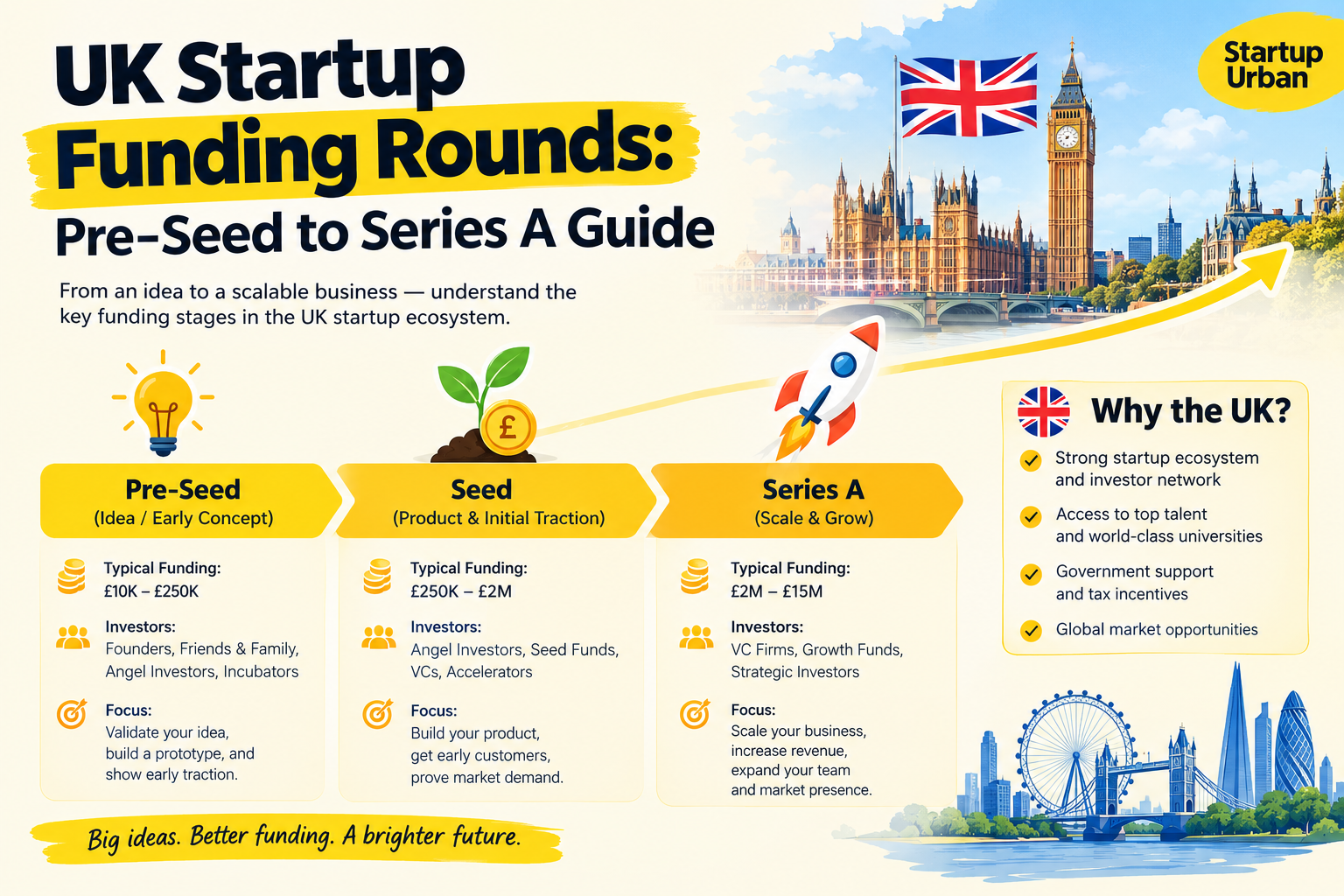
Raising money is one of the most confusing parts of building a company, especially for first-time founders. Labels such as pre-seed, seed and Series A sound precise, yet they mean different things to different investors. This guide explains how each stage works for UK startups, what investors expect to see, and how much capital is realistic at every step.
Britain has one of the deepest venture ecosystems in Europe, and London consistently ranks among the world’s top startup cities. Government-backed tax schemes also make the country unusually friendly to early-stage backers. Understanding the funding ladder helps UK startups plan runway, avoid dilution traps and approach the right investors at the right moment.
Why Funding Stages Matter for UK Startups
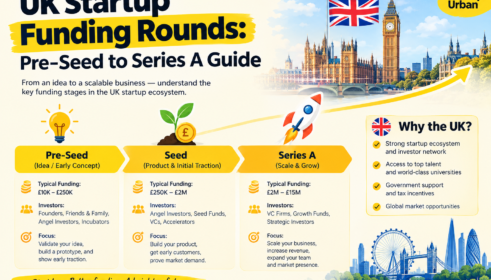
Each round exists to answer one question. Pre-seed asks whether the problem is real. Seed asks whether people will pay for your solution. Series A asks whether the business can grow in a repeatable way. Investors price risk according to the question being answered, which is why cheque sizes and valuations climb with each stage. Most UK startups that struggle to raise are pitching a Series A story with pre-seed evidence.
Table 1: Funding stages at a glance for UK startups (indicative ranges)
| Stage | Typical raise | Typical pre-money valuation | Main goal | Common investors |
|---|---|---|---|---|
| Pre-seed | £50k–£500k | £1m–£4m | Validate idea, build MVP | Founders, angels, accelerators |
| Seed | £500k–£2.5m | £4m–£12m | Product-market fit, first revenue | Angel syndicates, seed VCs, EIS funds |
| Series A | £3m–£12m | £15m–£50m | Scale a repeatable growth engine | Institutional VCs |
These figures vary by sector, city and market conditions. Treat them as planning ranges, not rules.
Pre-Seed: Turning an Idea into Evidence
Pre-seed is the earliest outside-funding stage, and often the founders’ own savings carry it. For most UK startups, a pre-seed round buys six to twelve months of runway: enough to build a minimum viable product, speak to customers and assemble a small core team. Cheques are modest, usually £50,000 to £500,000, and are frequently structured as convertible instruments such as Advance Subscription Agreements (ASAs), which postpone the valuation discussion until a priced round.
Investors at this stage include angels, micro-VCs, university funds and accelerators such as Entrepreneur First or Techstars London. They are backing people, so team background, speed of execution and clarity of thinking outweigh revenue. Many UK startups at pre-seed have no revenue at all, and that is perfectly normal.
What should you show? A clearly defined problem, insights from 20 to 30 customer conversations, a prototype or waitlist, and a believable plan for the next milestone. A concise deck of ten to twelve slides is plenty.
SEIS and EIS: The UK’s Hidden Advantage
Few countries offer tax incentives as generous as those available to early-stage investors here. The Seed Enterprise Investment Scheme (SEIS) and the Enterprise Investment Scheme (EIS) reduce the risk of backing young companies, which is a major reason angels write cheques for UK startups that might look too early elsewhere.
Table 2: SEIS vs EIS (approximate, verify current limits with HMRC)
| Feature | SEIS | EIS |
|---|---|---|
| Best suited to | Very early companies | Seed to growth-stage companies |
| Company raise limit | Around £250k | Several million per year |
| Investor income tax relief | 50% | 30% |
| Company age limit | About 3 years | About 7 years (longer for knowledge-intensive firms) |
| Capital gains benefits | Yes | Yes |
Thresholds are updated periodically, so always check the HMRC website and apply for advance assurance before approaching investors. Investors expect it, and it signals professionalism. Founders who understand these schemes find that UK startups can raise money faster because backers already have a built-in tax cushion.
Seed: Proving the Business Model
Seed is where the business must start proving itself. Rounds typically run from £500,000 to £2.5 million, funding 18 to 24 months of runway, first sales hires and product refinement. Investors expect early traction: paying customers, pilot contracts, strong waitlist conversion or rapidly growing usage.
Seed valuations commonly sit between £4 million and £12 million pre-money, with founders selling roughly 15% to 25% of the company. Selling much more than that can make later rounds difficult, because dilution compounds. Rounds are either priced equity, often with SEIS/EIS-compliant shares, or convertible notes. A lead investor usually sets terms and others follow.
London hosts seed funds such as Seedcamp and Passion Capital, but outside the capital, regional angel networks across Manchester, Edinburgh, Bristol and Cambridge are increasingly active. This shows that UK startups are no longer tied to a single city.
Chart 1 compares the midpoint raise at each stage and shows how sharply capital needs grow for UK startups as they mature.
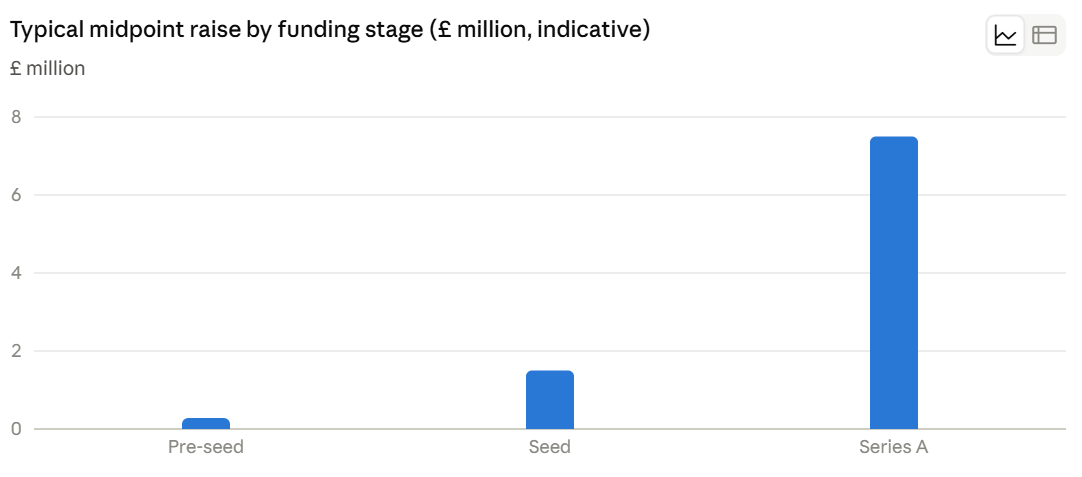
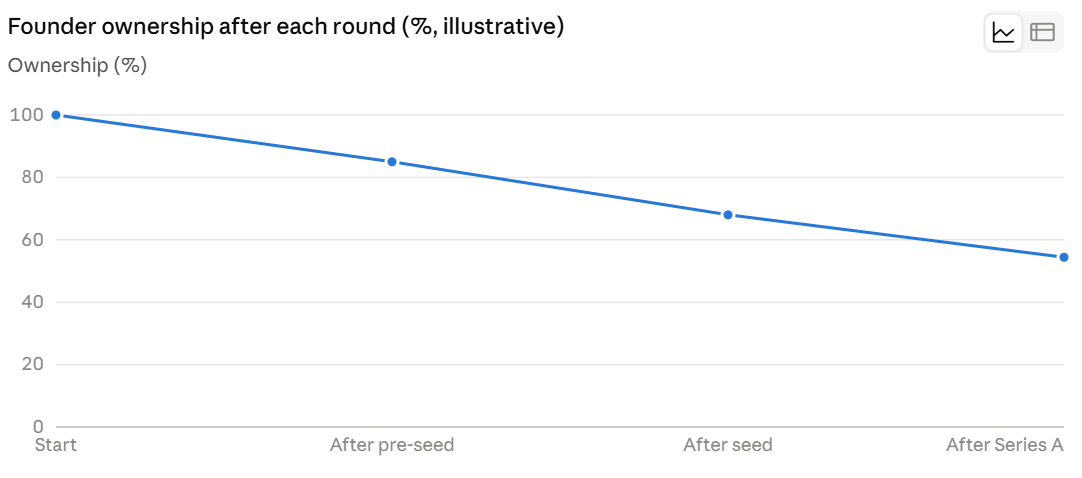
Smart founders of UK startups model dilution before every negotiation, so they know how much control they will hold at Series B and beyond.
Common Mistakes Made by UK Startups
- Pitching the wrong stage. Investors quickly spot a mismatch between your evidence and your ask. Many UK startups lose momentum by approaching Series A funds with seed-level metrics.
- Ignoring investor fit. Research sector focus, cheque size and portfolio conflicts. A targeted list of 40 funds beats a mass email to 400.
- Chasing an inflated valuation. A high number feels good until the next round, when a down round damages morale and reputation.
- Messy legal housekeeping. Unclear share ownership, missing IP assignments or absent advance assurance slow due diligence. A clean cap table is a competitive advantage for UK startups.
- Running out of runway. Begin fundraising with at least nine months of cash. Rounds often take three to six months from first meeting to money in the bank.
Alternative Funding Routes
Equity is not the only option. Innovate UK grants, Start Up Loans from the British Business Bank and revenue-based finance can extend runway without dilution. Grants are especially valuable for deep-tech, health and climate ventures. Many UK startups combine a grant with a small angel round to reach seed milestones while selling very little equity.
How Investors Evaluate UK Startups
Beyond metrics, investors weigh four factors: team, market, traction and timing. A strong team shows relevant experience, resilience and the ability to hire. A large, growing market makes the upside worth the risk. Traction proves demand, and timing explains why this company can win now.
Investors researching UK startups also study exit potential: trade sales to global technology firms, listings on the London Stock Exchange or Nasdaq, and secondary sales. The country’s track record of producing large fintech, health and software companies gives backers confidence that UK startups can deliver significant outcomes.
Practical Steps to Prepare
- Define your stage honestly. Match your evidence to the round you are raising.
- Build a metrics dashboard. Track revenue, growth, churn, burn and runway weekly.
- Prepare a data room. Include financials, contracts, cap table, IP documents and a product roadmap.
- Secure SEIS/EIS advance assurance. It removes friction for angels.
- Seek warm introductions. They convert far better than cold outreach, which is why communities and events for UK startups matter.
- Run a tight process. Meet investors in a concentrated window to create healthy competition and momentum.
Funding Trends to Watch
Funding cycles shift. After the exuberant years of 2021, investors became more selective and began rewarding efficient growth and a visible path to profitability. Artificial intelligence, climate technology, fintech and health technology continue to attract attention. Founders of UK startups should therefore show capital efficiency, defensible technology and realistic hiring plans rather than growth at any cost.
Conclusion
The journey from pre-seed to Series A is a ladder, and each rung demands different proof. Pre-seed rewards vision and team, seed rewards early traction, and Series A rewards repeatable growth. With generous tax incentives, an active angel community and a deep pool of venture capital, UK startups are well placed to raise capital, provided founders prepare carefully, understand dilution and approach the right investors at the right time.
Frequently Asked Questions About UK Startups
How much do UK startups raise at pre-seed?
Most raise between £50,000 and £500,000, depending on sector, team strength and whether the round is convertible or priced.
Do all UK startups need SEIS or EIS?
No, but both schemes make it far easier to attract angel investors, so most early-stage founders apply for advance assurance.
How long does it take UK startups to move from seed to Series A?
Typically 18 to 30 months, though fast-growing companies can raise sooner and capital-intensive ones may take longer.
What is the biggest reason UK startups fail to raise Series A?
Usually a gap between the metrics investors expect, such as growth and retention, and what the company can demonstrate.
Are UK startups better off raising from local or international investors?
It depends on ambition. Local investors offer speed and tax-scheme familiarity, while international funds can bring larger cheques and global networks, so many founders combine both.