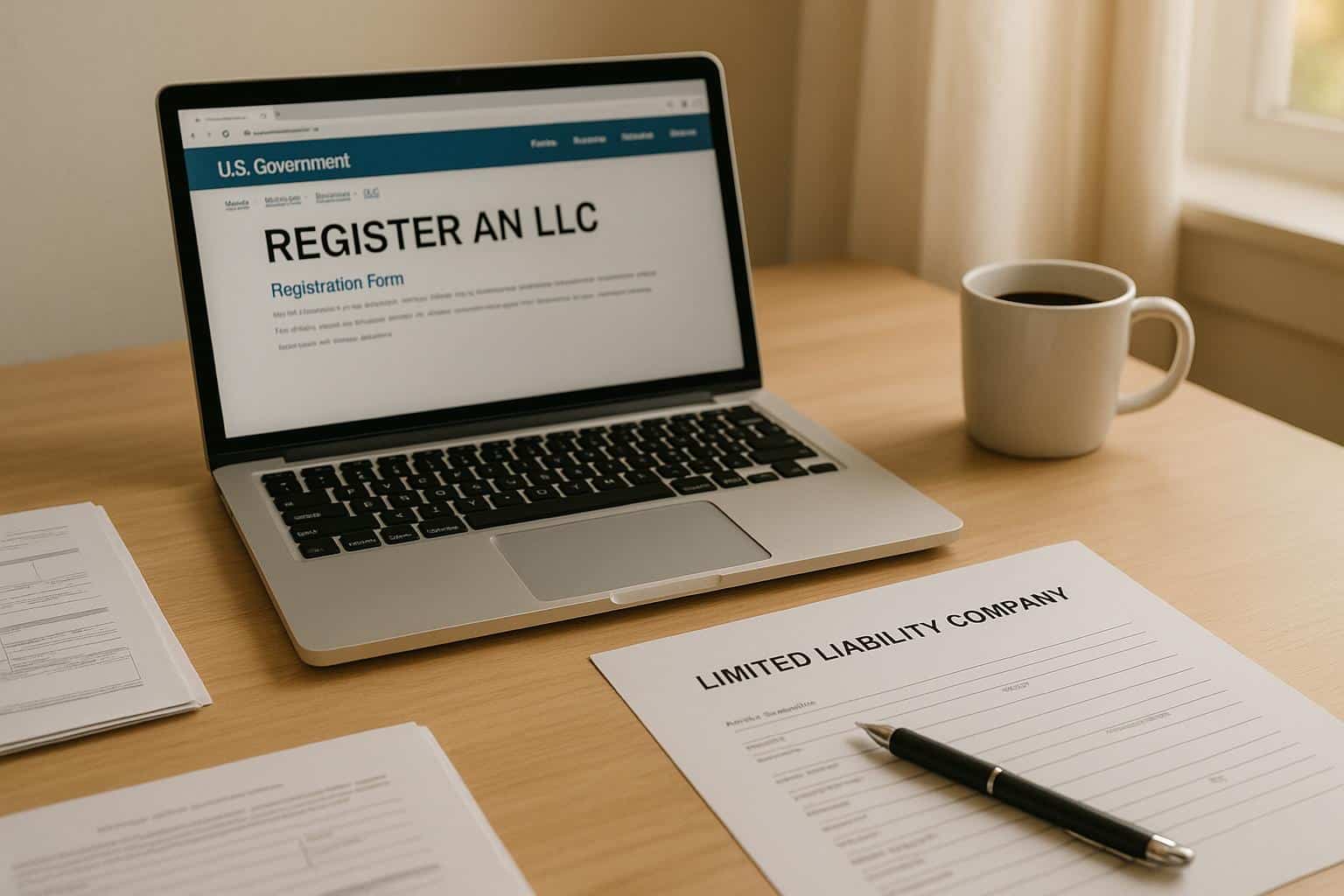
If you live outside the United States and want to build a company that can invoice American clients, accept payments through US processors like Stripe, or raise money from US investors, forming a Limited Liability Company (LLC) is often the fastest and most cost-effective path in. Unlike a C-Corporation, an LLC involves less paperwork, fewer formalities, and no requirement for a board of directors — which makes it especially appealing for solo founders, freelancers, and early-stage startups testing an idea before committing to something more complex.
The good news: you do not need to be a US citizen, a US resident, or even hold a visa to own and operate a US LLC. Thousands of founders in India, Nigeria, the Philippines, Pakistan, Brazil, and dozens of other countries run fully compliant US LLCs today. This guide walks through exactly what that process looks like, from choosing a state to keeping the business compliant year after year.
Why Foreign Founders Choose a US LLC
Before diving into the steps, it helps to understand why this structure is so popular among non-US founders.
Credibility with customers and partners. A US business address and entity name make it easier to close deals with American clients who may be hesitant to wire money to an individual overseas.
Access to US payment infrastructure. Platforms like Stripe, PayPal Business, and Mercury Bank generally require a US entity (or at least strongly favor one) for full functionality, lower fees, and fewer holds on funds.
Liability protection. As the name suggests, an LLC limits your personal liability. If the business is sued or accumulates debt, your personal assets outside the company are generally protected, provided you maintain proper separation between personal and business finances.
Pass-through taxation. By default, an LLC does not pay federal corporate income tax itself. Profits pass through to the owners, who report them individually — though as a foreign owner, your exact tax obligations depend on where your income is sourced and how the business operates, which is why professional tax guidance matters once revenue starts flowing.
Simplicity. Compared to a C-Corp, there is no requirement for annual shareholder meetings, a board of directors, or complex stock structures — ideal for a lean startup in its first year or two.
Step 1: Choose the Right State
Not all states are created equal when it comes to forming an LLC as a non-resident. While you can technically register in any of the 50 states, three consistently stand out for foreign founders:
- Delaware — The gold standard for startups planning to raise venture capital. Delaware has a well-established body of business law, a specialized Court of Chancery for business disputes, and strong investor familiarity. However, it charges an annual franchise tax and requires a separate foreign qualification if you conduct business in another state.
- Wyoming — Known for low fees, no state income tax, and strong privacy protections since owner names often don’t appear in public filings. A popular choice for e-commerce, content businesses, and freelancers who don’t need VC funding.
- New Mexico — Similarly low-cost and privacy-friendly, though with a smaller legal ecosystem than Delaware or Wyoming.
If you plan to eventually raise institutional funding, Delaware is usually worth the extra cost. If you’re bootstrapping a digital product, agency, or content business, Wyoming often makes more practical sense. Avoid choosing a state simply because you’ve heard the name — match the state to your actual business model and growth plans.
Step 2: Choose a Business Name
Your LLC name must be unique within your chosen state and typically must include a designator such as “LLC” or “Limited Liability Company.” Most Secretary of State websites offer a free online search tool to check name availability before you file.
It’s worth also checking:
- Whether the matching .com domain is available
- Whether the name is free on Instagram, YouTube, and other platforms you plan to use for marketing
- Whether a similar trademark already exists via the USPTO’s trademark database
Reserving consistency across your legal name, domain, and social handles early on saves significant rebranding headaches later.
Step 3: Appoint a Registered Agent
Every US LLC is legally required to have a registered agent — a person or company with a physical street address in the state of formation who can receive legal and government correspondence on the company’s behalf during business hours.
As a foreign founder without a US address, you cannot act as your own registered agent unless you have a qualifying local address. Instead, you’ll hire a commercial registered agent service, which typically costs between $50 and $150 per year. This is a mandatory, ongoing requirement — not a one-time task — since the state must always be able to reach your business.
Step 4: File the Articles of Organization
This is the actual document that legally creates your LLC. Requirements vary slightly by state, but generally include:
- The LLC’s name and address
- The registered agent’s name and address
- The management structure (member-managed or manager-managed)
- The organizer’s signature (this can be you, even from abroad)
Filing is usually done online through the Secretary of State’s website, with fees ranging from around $50 (Wyoming) to $300+ (some states). Processing time ranges from same-day to a few weeks depending on the state and whether you pay for expedited service.
Step 5: Draft an Operating Agreement
While not always legally required, an Operating Agreement is one of the most important documents for a foreign-owned LLC. It outlines:
- Ownership percentages among members
- How profits and losses are distributed
- Decision-making authority and voting rights
- Procedures for adding or removing members
- What happens if a member wants to exit or the company dissolves
Banks, payment processors, and potential investors will often ask to see this document. Even as a single-member LLC, having one signed and on file strengthens the legal separation between you and the business — which is central to maintaining liability protection.
Step 6: Obtain an EIN (Employer Identification Number)
An EIN is essentially a Social Security Number for your business, issued by the IRS. You’ll need it to open a US bank account, file taxes, and work with most payment processors.
Foreign founders without a US Social Security Number or ITIN can still get an EIN, but the process is slightly different: instead of applying online (which requires an SSN/ITIN), you must submit Form SS-4 by fax or mail, or work through a formation service that handles this on your behalf. Processing by fax typically takes one to two weeks; by mail, it can take four to eight weeks. Some formation companies offer expedited EIN services for an additional fee.
Step 7: Open a US Business Bank Account
With your Articles of Organization, EIN, and Operating Agreement in hand, you can open a US business bank account. Traditional banks often require an in-person visit, which is impractical for most foreign founders — so many opt for fintech-friendly alternatives like Mercury, Relay, or Wise Business, which are built specifically to onboard non-resident founders remotely.
A dedicated business account is not optional if you want to preserve your LLC’s liability protection. Mixing personal and business funds — known as “commingling” — is one of the fastest ways to lose that protection in the eyes of a court.
Step 8: Understand Your Tax Obligations
This is the step most foreign founders underestimate. Key points to know:
- Annual IRS filing: A foreign-owned single-member LLC is generally required to file Form 5472 along with a pro forma Form 1120, even if the company had no income. Penalties for missing this filing start at $25,000, so this is not optional paperwork.
- State-level requirements: Depending on your state, you may owe an annual report fee, franchise tax, or both.
- Effectively Connected Income (ECI): Whether your LLC’s income is taxable by the US often depends on whether it is “effectively connected” to a US trade or business, which is a nuanced legal test — not simply where your customers are located.
- ITIN: If you personally owe US tax, you may need an Individual Taxpayer Identification Number to file a personal return.
Because the rules around foreign ownership, sales tax nexus, and international tax treaties are genuinely complex and change over time, this is the one area where hiring a CPA experienced with non-resident-owned LLCs pays for itself many times over. A single missed filing can cost far more than a year of professional advice.
Step 9: Maintain Ongoing Compliance
Forming the LLC is just the beginning. To keep it in good standing, you’ll typically need to:
- File an annual report with the state (requirements and fees vary)
- Renew your registered agent service
- File Form 5472/1120 with the IRS every year
- Keep accurate financial records separating business and personal expenses
- Renew any required business licenses depending on your industry
Many founders set calendar reminders or use a compliance service to avoid missing these deadlines, since a lapsed LLC can lose its liability protection and good standing entirely.
Common Mistakes Foreign Founders Make
- Choosing a state based on hype rather than strategy — Delaware isn’t always the right answer if you have no plans to raise VC funding.
- Skipping the Operating Agreement — This document matters more, not less, when there’s no in-person banking relationship to fall back on.
- Ignoring Form 5472 — Many founders assume “no income, no filing required.” That assumption is incorrect and can be costly.
- Commingling funds — Using a personal PayPal or bank account for business transactions undermines the very liability protection the LLC is meant to provide.
- Not budgeting for ongoing costs — Registered agent fees, annual reports, and accounting support are recurring expenses, not one-time costs.
Final Thoughts
Registering a US LLC as a foreign founder is more accessible than most people assume — the entire process can often be completed remotely in a few weeks for a few hundred dollars. But “easy to start” doesn’t mean “no maintenance required.” The founders who get the most value from a US LLC are the ones who treat compliance — registered agents, annual reports, and IRS filings — as seriously as they treat product development and customer acquisition.
Done right, a US LLC gives you a credible, liability-protected foundation to sell into the world’s largest market, access world-class payment infrastructure, and position your company for future fundraising — all without ever needing to relocate.
This article is for general informational purposes and does not constitute legal or tax advice. Consult a licensed attorney or CPA familiar with non-resident LLC ownership before making formation decisions specific to your situation.