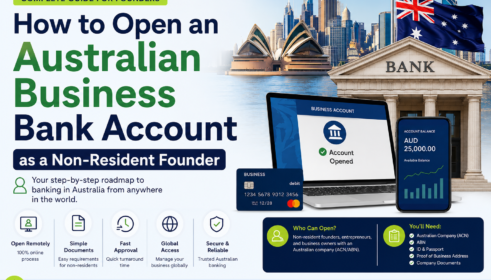
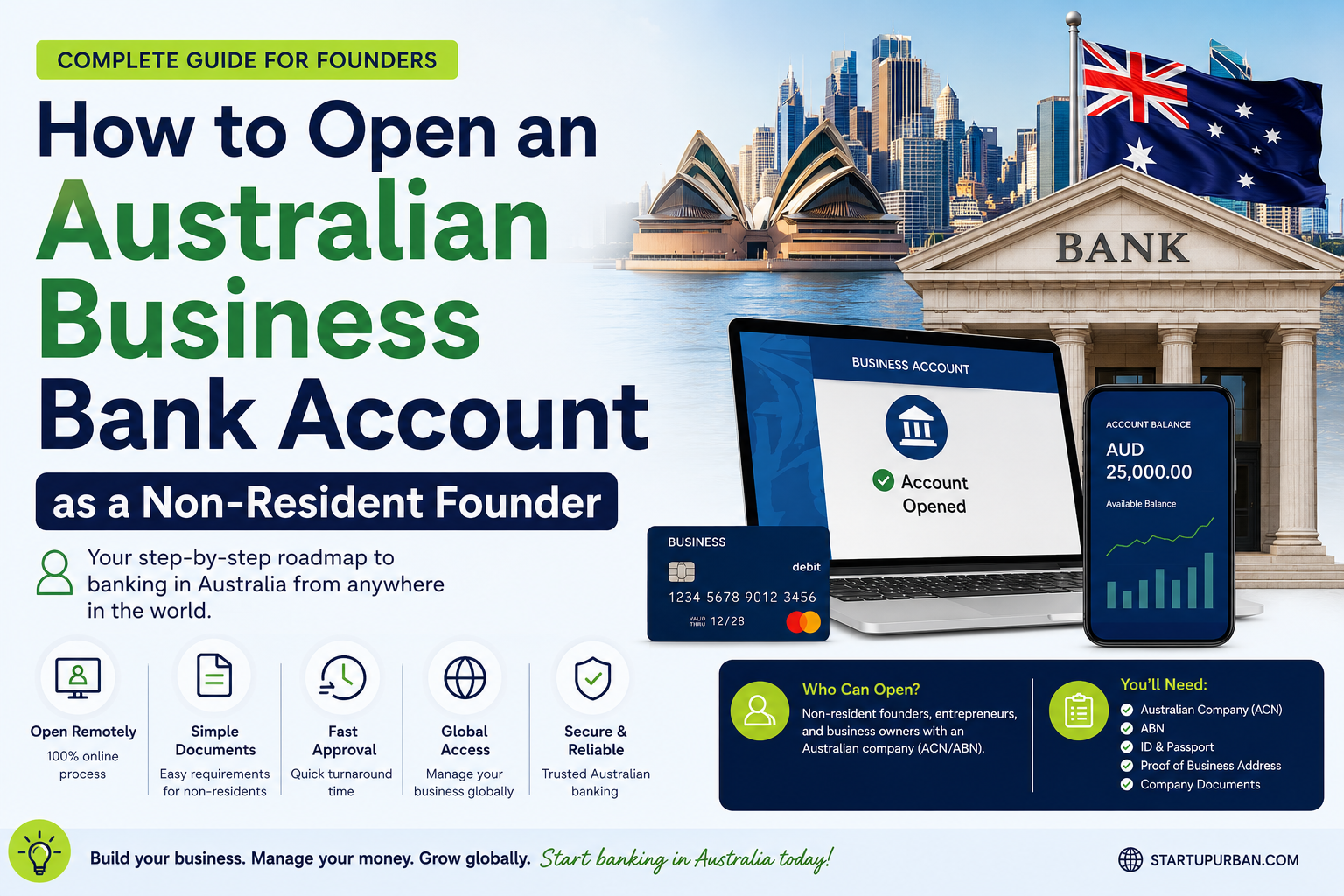
Setting up an Australia business as a non-resident founder is easier than most overseas entrepreneurs expect, but opening the actual bank account is usually the part that trips people up. Banks in Australia are cautious about non-resident applicants because of identity verification rules, anti-money-laundering laws, and tax reporting obligations. Still, thousands of foreign founders open an Australia business bank account every year to serve local customers, hire local staff, or use Australia as a base for expansion into the Asia-Pacific region. This guide walks through exactly how the process works in 2026, what documents you need, which banks are realistically open to non-residents, and how to avoid the delays that catch most first-time applicants off guard.
Why Non-Residents Want an Australia Business Bank Account
Australia has a stable currency, a transparent regulatory system, and strong trade ties across Asia-Pacific, which makes it an attractive base for an Australia business even if the founder never plans to relocate. A local account lets you accept payments in Australian dollars, pay local suppliers and staff without conversion fees, build a domestic transaction history that strengthens future loan or investor applications, and satisfy marketplaces or clients who require an Australian bank account before releasing payments. For SaaS founders, e-commerce sellers, and consultants alike, a local account also signals legitimacy to Australian customers who are wary of paying an unfamiliar overseas entity.
Step 1: Register Your Australia Business First
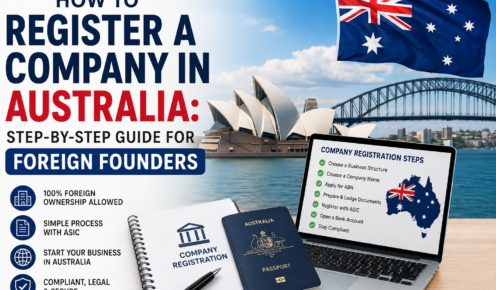
Before any bank will talk to you, your Australia business needs to legally exist. This usually means:
- Registering an Australian company through the Australian Securities and Investments Commission (ASIC), or
- Registering as a foreign company if you already operate a business overseas and want an Australian branch, and
- Applying for an Australian Business Number (ABN) and, if you’re forming a company, an Australian Company Number (ACN).
Most non-resident founders choose to incorporate a Proprietary Limited (Pty Ltd) company because it’s the structure banks recognize most easily. A Pty Ltd company must have at least one director who ordinarily resides in Australia — this single rule is the biggest hurdle for solo non-resident founders, and it’s worth solving before you approach any bank for your Australia business account.
Step 2: Understand the Identity Verification Rules
Australian banks operate under the AML/CTF Act, which requires them to verify the identity of every beneficial owner and signatory tied to an Australia business account. For residents, this is simple — a driver’s license and a visit to a branch. For non-residents, banks generally require certified copies of your passport, proof of your overseas residential address, and in many cases a face-to-face or video verification session. Some banks will only complete this step once you are physically in Australia, which is why many founders time a short trip around company registration and account opening together.
Step 3: Choose the Right Bank for Your Australia Business
Not every Australian bank is equally welcoming to non-resident founders. The table below compares the most common options as of 2026.
| Bank / Provider | Remote Account Opening | Non-Resident Director Required in Person? | Typical Minimum Deposit | Best For |
|---|---|---|---|---|
| Commonwealth Bank (CBA) | Limited | Often yes | None | Established Australia business with local presence |
| ANZ | Limited | Often yes | None | Larger companies, trade finance needs |
| Westpac | Limited | Often yes | None | Businesses already banking with Westpac group overseas |
| NAB | Limited | Often yes | None | SMEs with an Australian resident director |
| Wise Business | Yes, fully online | No | None | Fast setup, multi-currency Australia business payments |
| Airwallex | Yes, fully online | No | None | E-commerce, marketplace, and SaaS founders |
| Revolut Business | Yes, in select cases | No | None | Startups already using Revolut personally |
The traditional “Big Four” banks (CBA, ANZ, Westpac, NAB) still dominate lending and merchant services for a serious Australia business, but they are the slowest and strictest for non-residents. Fintech alternatives like Wise Business and Airwallex have become the default first step for most non-resident founders because they issue Australian account details — including a BSB and account number — without requiring you to fly in.
Step 4: Prepare Your Documentation
Every Australia business bank account application asks for a similar core document set, though exact requirements vary by institution:
| Document | Why It’s Needed |
|---|---|
| Certified passport copy | Confirms identity of directors/beneficial owners |
| ASIC company extract | Proves the Australia business is legally registered |
| ABN confirmation | Confirms tax registration |
| Proof of overseas address | Utility bill or bank statement, usually within 3 months |
| Company constitution or registration documents | Confirms company structure and ownership |
| Visa or immigration documents (if applicable) | Required if a director is temporarily in Australia |
| Business plan or website | Some banks request this to assess legitimacy |
Certification usually needs to come from a notary public, a lawyer, or an Australian consulate/embassy official, depending on your home country. Skipping proper certification is one of the most common reasons an Australia business account application gets rejected on the first attempt.
Step 5: Decide Between a Traditional Bank and a Fintech Provider
This is the decision point where most non-resident founders save the most time. Illustrative average account-opening timelines look like this:
Average Time to Open an Australia Business Account (Illustrative)
| Provider Type | Typical Setup Time | In-Person Requirement |
|---|---|---|
| Big Four Bank | 3–6 weeks | Usually required |
| Regional/Second-Tier Bank | 2–4 weeks | Sometimes required |
| Fintech (Wise, Airwallex, Revolut) | 1–3 days | Not required |
Setup Time Comparison (days, illustrative)
Big Four Bank         |██████████████████████████████████ 35
Second-Tier Bank      |████████████████████████ 24
Fintech Provider       |███ 3
                       0        10        20        30       40
The chart above is illustrative rather than an official statistic, but it reflects the consistent pattern founders report: fintech providers are dramatically faster for a first Australia business account, while traditional banks remain better once you need business loans, merchant terminals, or trade finance.
Step 6: Apply and Complete Verification
Once you’ve chosen a provider, the actual application for your Australia business account generally follows this sequence:
- Submit the online or in-branch application with your ASIC and ABN documents.
- Complete identity verification (video call, in-person branch visit, or certified document upload, depending on provider).
- Provide details of expected transaction volume and business activity — banks want to understand cash flow patterns for your Australia business before approving the account.
- Wait for compliance review. This is where non-resident applications for an Australia business often take longer, since AML checks are more thorough for overseas beneficial owners.
- Receive account details (BSB and account number) once approved.
Common Reasons Non-Resident Applications Get Rejected
Founders repeatedly run into the same issues when applying for an Australia business account:
- No Australian resident director listed on the company, which many traditional banks still require informally even when it’s not a strict legal condition for the bank account itself.
- Incomplete or improperly certified identification documents.
- A business activity description that doesn’t match the company’s registered purpose.
- No clear connection between the applicant and genuine Australian business activity (banks are wary of shell companies).
- Missing proof of address, or an address that doesn’t match supporting documents.
Addressing each of these before you apply significantly increases approval odds for your Australia business account on the first attempt.
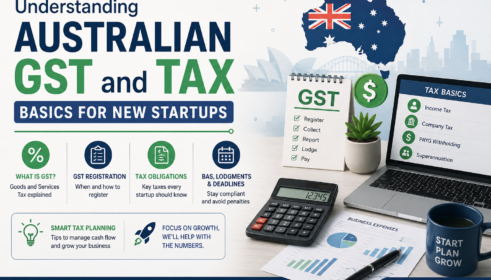
Tax and Compliance Considerations for Your Australia Business
Opening an account is only one part of running a compliant Australia business. Non-resident founders should also budget time for:
- GST registration: Required once your Australia business turnover crosses the ATO threshold, or earlier if you want to claim GST credits.
- PAYG and superannuation: Applicable once you hire staff inside Australia.
- Company tax return: An Australian-registered company must lodge annual tax returns regardless of where the founder lives.
- Double tax agreements: Australia has treaties with many countries that can reduce withholding tax on dividends sent to a non-resident founder — a tax advisor should confirm how this applies to your specific Australia business structure.
Working with an Australian accountant early is one of the highest-leverage moves a non-resident founder can make, since tax structuring decisions made at incorporation are expensive to unwind later.
Fintech vs. Traditional Bank: Which Should You Start With?
For most non-resident founders, the practical path looks like this: open a fintech account (Wise Business or Airwallex) first to get a working Australia business account with an Australian BSB within days, start operating and building a transaction history, and then apply to a traditional bank later once the business has revenue, local staff, or a resident director in place. This staged approach avoids the multi-week delay of a Big Four application blocking your launch timeline, while still leaving the door open to full-service banking as the Australia business matures.
Tips to Speed Up Approval
- Appoint an Australian resident director if possible, even a nominee director through a registered agent, since this removes the single biggest friction point for an Australia business account.
- Get documents certified before you apply, not after a bank requests them — this alone can save two to three weeks.
- Keep your business activity description specific and consistent across ASIC registration, ABN application, and the bank form.
- Choose a fintech provider first if speed matters more than full banking services in month one of your Australia business.
- Maintain a professional website and clear business documentation, since banks increasingly check this during compliance review.
Final Thoughts
Opening an Australia business bank account as a non-resident founder is entirely achievable, but it rewards preparation. Founders who register their company correctly, certify their documents in advance, and choose the right provider for their stage of growth typically get their Australia business account approved without the delays that frustrate less-prepared applicants. Start with a fast-moving fintech option to get operational, build your compliance profile, and graduate to a traditional bank once your Australia business has the local footprint that makes that relationship worthwhile.
Frequently Asked Questions
Can I open an Australia business bank account without visiting Australia? Yes, through fintech providers like Wise Business and Airwallex, most non-resident founders can complete the entire process online. Traditional banks are more likely to require an in-person visit at some stage, particularly for identity verification.
Do I need an Australian resident director to open a business bank account? It isn’t always a strict legal requirement for the bank account itself, but many traditional banks treat it as an unofficial prerequisite. Appointing a resident or nominee director is one of the fastest ways to smooth approval for your Australia business.
How long does it take to open an Australia business account as a non-resident? Fintech providers can approve accounts within a few days, while traditional banks typically take several weeks due to more extensive compliance review of non-resident beneficial owners.