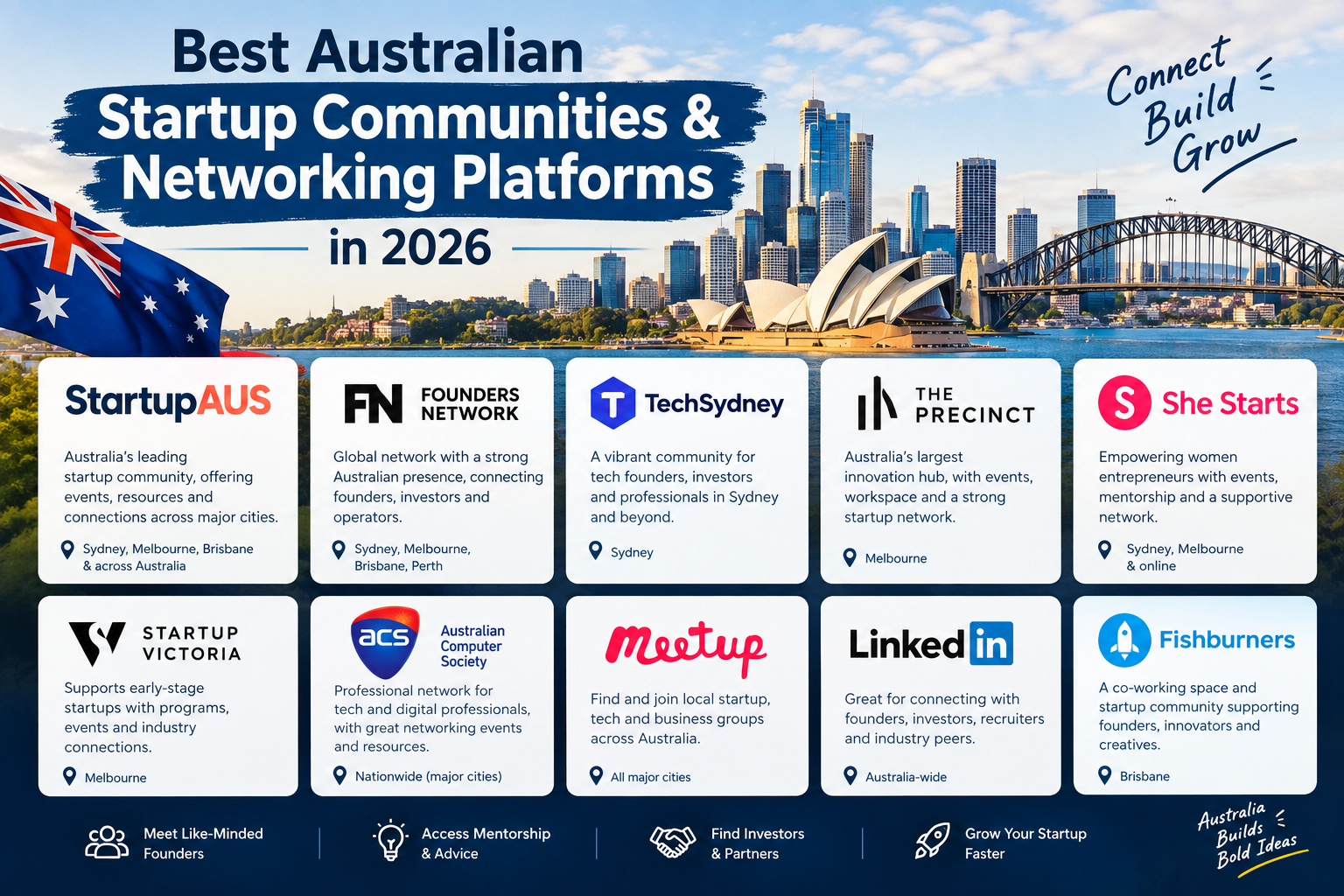
Building an Australian Startup has never depended more on who you know. Capital is returning, artificial intelligence is steering what gets funded, and the support ecosystem is being reshuffled, with some well-loved names changing hands. Whether you are a founder, an angel investor or an analyst mapping the market, the communities below are where introductions, pilots and term sheets usually begin.
This guide ranks the most useful Australian Startup communities and networking platforms for 2026. It explains who each one suits and sets the latest funding data beside them, so you can decide where to spend your time.
Why Community Matters for an Australian Startup in 2026
Australia is a compact market with global ambitions, so warm introductions carry unusual weight. Local founders now raise about 41% of their early-stage capital from overseas investors. In practice, every Australian Startup is pitching to Sydney, Singapore and San Francisco at once, and a strong community shortens that journey.
The money picture is encouraging but uneven. Cut Through Venture counted 64 venture deals in the second quarter, taking first-half funding to roughly A$3.5 billion, yet only 31 rounds under A$5 million were announced. Two deals, Firmus and Airwallex, absorbed a large share of the total. For the typical early-stage Australian Startup, relationships matter more than ever.
Table 1: The Australian Startup Funding Snapshot, 2026
| Metric | Latest figure | Source |
|---|---|---|
| First-half 2026 funding | ~A$3.5 billion | Cut Through Venture / Forbes Australia |
| Q2 2026 capital announced | A$1.7 billion, 64 venture rounds | Cut Through Venture |
| Sub-A$5M rounds in Q2 | 31 | Cut Through Venture |
| AI share of capital (Q2) | ~75% | Cut Through Venture |
| Early-stage capital from overseas | 41% | Side Stage Ventures / Dealroom |
| Projected 2026 VC investment | US$4.3 billion (+48% on 2025) | Side Stage Ventures / Dealroom |
| Female founders’ share | ~33% of capital, 26% of deals | Cut Through Venture |
Two charts show where the pressure sits: how few local investors back the earliest rounds, and how heavily AI dominates.
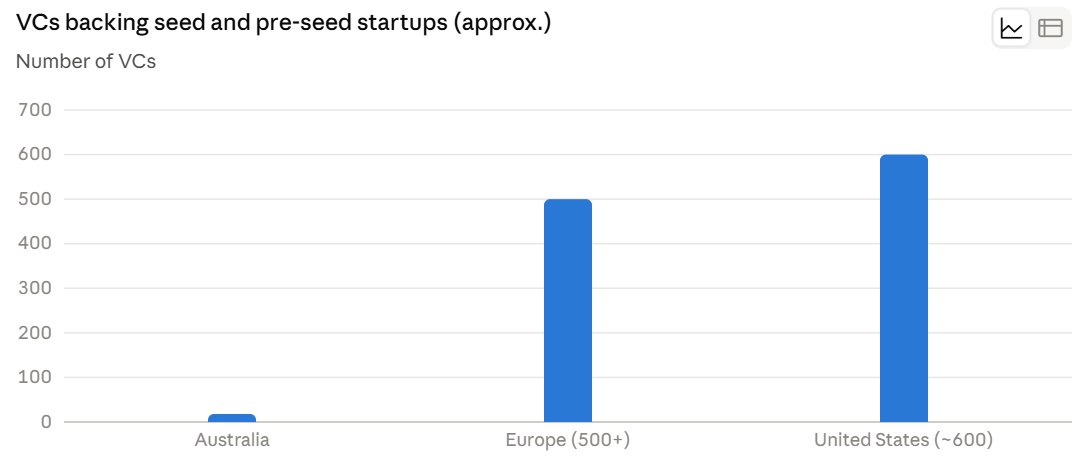
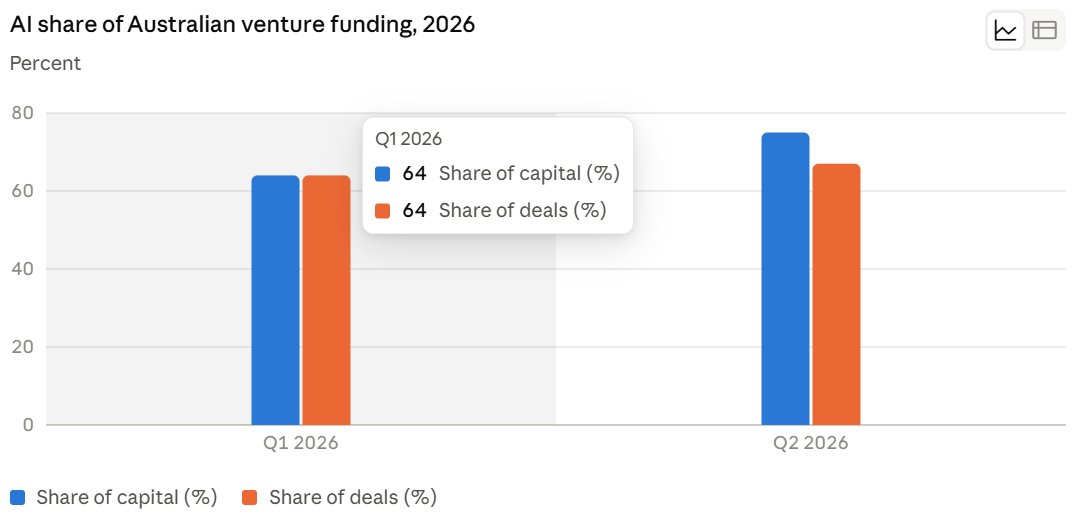
The seed gap is stark. Only 18 local VCs back seed and pre-seed rounds, against more than 500 in Europe and nearly 600 in the US. Every Australian Startup therefore needs a warm path to investors, and the platforms below provide one. The Q2 AI figures are rounded from the report’s “roughly three-quarters of capital and two-thirds of deals.”
The Best Australian Startup Communities and Networking Platforms
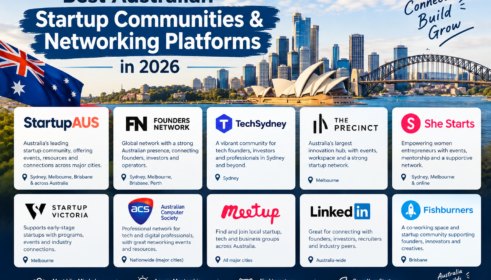
1. Startmate
Established in 2010, Startmate is among the country’s best-known accelerators. Its strength is the mentor and alumni network plus international connections, which help an Australian Startup test offshore markets early. Best for: pre-seed founders with a clear product and global intent.
2. Stone & Chalk
Stone & Chalk describes itself as a not-for-profit and the largest innovation community in Australia, and it began in 2015 around fintech. Its hubs now include Sydney’s Tech Central, Melbourne and Adelaide’s Lot Fourteen. One 2026 guide puts premium dedicated desks from about A$700 a month. Corporate introductions and structured investor programs suit a scaling Australian Startup looking for enterprise customers.
3. Fishburners (in transition)
Founded in 2011, Fishburners built one of the country’s most recognised founder communities. It entered voluntary administration in May 2026 after rental debt linked to the state-run Sydney Startup Hub. On 2 June, Scalare Partners acquired its brand, programs and community assets. Treat it as a community to watch rather than a settled one, and confirm current membership terms before committing. The episode shows that an Australian Startup community is only as durable as its funding model.
4. Antler
Antler backs people at the very earliest stage, often before a team or idea is locked in, and has operated from the Sydney Startup Hub. It suits solo founders seeking co-founders and first capital, and it widens the network of any Australian Startup built from scratch.
5. Blackbird, Airtree and angel networks
Venture firms are communities too. Ful.io’s tally shows Blackbird Ventures leading Australian SaaS investing with 83 deals, while Sydney Angels (62) and Artesian (57) keep pipelines moving. Attending their portfolio events and office hours lets an Australian Startup meet investors in settings where relationships build slowly and well.
6. Cicada Innovations
For hardware, robotics and deep tech, Cicada offers lab-grade facilities and university links. Its programs are designed around grants and the federal R&D Tax Incentive. A science-led Australian Startup gets far more from Cicada than from a generic coworking desk.
7. EnergyLab and Slingshot
EnergyLab, founded in 2017, focuses on clean energy. Slingshot, from 2013, pairs corporates with young companies. Both suit a niche Australian Startup chasing industry partners and pilot customers.
8. StartupAus and online communities
StartupAus is the national advocacy voice, and that matters as the sector lobbies over proposed capital gains tax changes. Add LinkedIn groups, founder Slack and Discord channels and local meetups. They cost nothing and give any Australian Startup a daily presence in the conversation.
Table 2: Comparing the Australian Startup Platforms
| Platform | Best for | Stage | Main strength |
|---|---|---|---|
| Startmate | Globally minded founders | Pre-seed to seed | Mentors, alumni, offshore links |
| Stone & Chalk | Scaleups, fintech, enterprise sales | Seed to growth | Hubs, corporate and investor intros |
| Fishburners (Scalare) | Peer community | Early stage | Large legacy network; verify new terms |
| Antler | Solo founders, co-founder matching | Day zero | Early capital plus cohort |
| Blackbird / angel groups | Fundraising | Seed to Series A | Direct investor access |
| Cicada Innovations | Deep tech, hardware | Pre-seed to growth | Labs, university links |
| EnergyLab / Slingshot | Climate, corporate pilots | Early stage | Industry partnerships |
| StartupAus / online groups | Policy, free networking | All stages | Advocacy, low cost |
How to Choose the Right Community for Your Australian Startup
Match the community to your stage, not its brand name.
- Idea or pre-seed: cohort programs such as Startmate or Antler give structure, peers and first cheques.
- Seed to Series A: investor-led networks and Stone & Chalk’s corporate introductions suit an Australian Startup ready to raise.
- Deep tech or climate: Cicada Innovations and EnergyLab offer the facilities and partners generalist spaces lack.
- Bootstrapped: free meetups, online groups and advocacy events keep costs near zero.
Networking Tips for Founders and Investors
Founders: Arrive with one specific ask, such as an introduction to a named buyer, rather than a general request for help. Lead with traction, follow up within 48 hours and give something first, whether that is a customer lead or a hiring tip.
Investors: With so few seed funds active, visible investors win the best deals. Publish your thesis, host office hours and show up at demo days, because founders remember who made time early.
Trends Shaping the Australian Startup Ecosystem in 2026
- AI dominance. AI took about three-quarters of capital in Q2. A non-AI Australian Startup needs a sharper story, often a vertical focus in areas like health or finance where investors still show appetite.
- Tax uncertainty. Cut Through Venture opened its latest report with a warning about proposed capital gains tax changes. Every Australian Startup planning an eventual exit should follow the debate.
- Consolidation of hubs. Between Fishburners’ rescue and the rebranding of Stone & Chalk’s Sydney site as the Tech Central Innovation Hub, physical communities are being rebuilt around more sustainable models.
- Offshore capital. With 41% of early-stage money arriving from abroad, communities with international bridges gain value.
- Diversity gains. Female founders took roughly a third of capital but about a quarter of deals, suggesting larger average rounds but still too few of them.
Frequently Asked Questions
What is the best community for an early-stage Australian Startup?
Startmate and Antler suit founders who want a structured cohort, while free meetups and online groups work well if you are still validating an idea.
Does an Australian Startup need to be based in Sydney?
Not strictly. NSW attracted roughly 65% of local startup funding in 2024, so Sydney offers the densest network, but Melbourne and Adelaide hubs and online communities are open to founders anywhere.
Are Australian Startup communities free?
Some are. Meetups, online groups and advocacy events cost little, whereas dedicated hub desks and accelerators charge fees or take equity.
Final Thoughts
The strongest Australian Startup communities in 2026 do three things well: they open investor doors, connect founders to paying customers and keep peers close when fundraising gets hard. Capital is flowing again, but it is concentrated, and early-stage cheques remain scarce. Whichever route you take, your Australian Startup will move faster with a network behind it than with a deck alone.