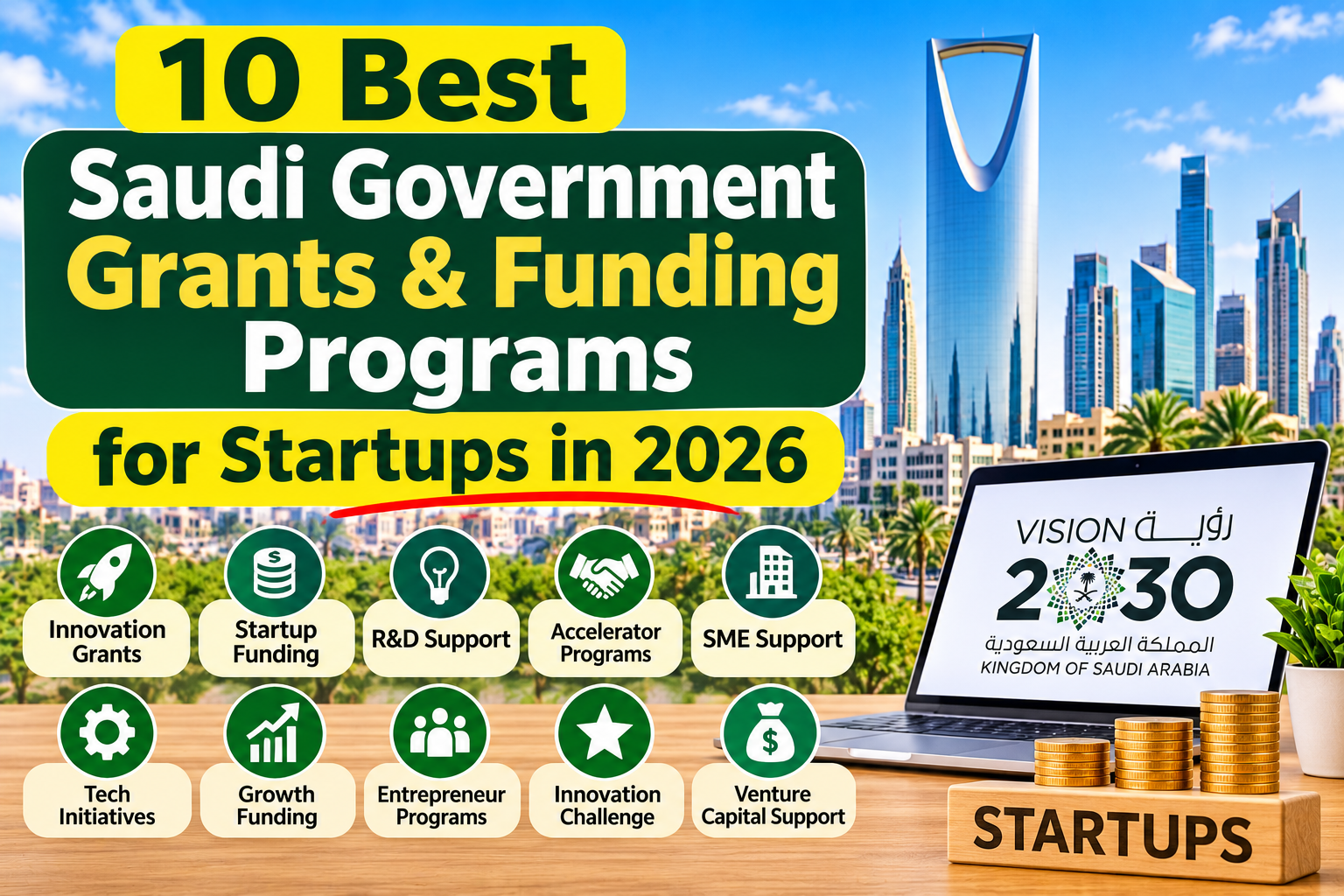
Where does early-stage money actually come from in the Kingdom? This guide to saudi arabia startup grants 2026 ranks ten government-backed programs, explains what each one pays for, and shows who can apply. Whether you are launching a Saudi Arabia startup or screening one for investment, read it as a map of options, not a promise of free cash.
A quick reality check: most official support is not a classic no-strings grant. It arrives as fee refunds, loan guarantees, fund-of-funds capital, low-cost lending and discounted services. For any Saudi Arabia startup, that mix still matters, because it cuts burn and makes private capital easier to win.
Why the Market Is Worth Watching in 2026
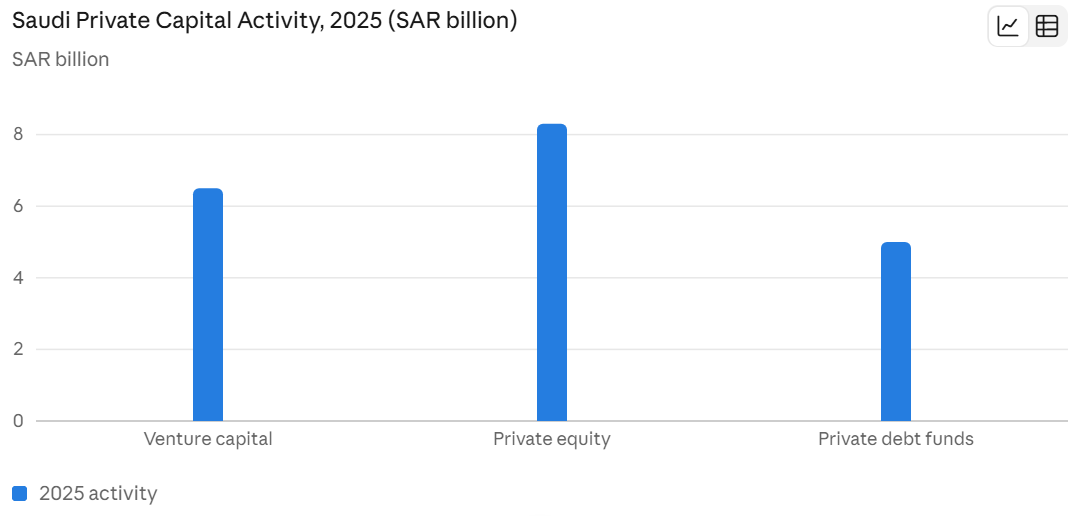
The market has real depth. According to Jada’s 2025 annual report, venture capital in the Kingdom reached SAR 6.5 billion across 257 deals, a 145% jump year on year, while private equity totalled SAR 8.3 billion across 25 transactions. Private debt funds grew from SAR 0.5 billion in 2020 to SAR 5.0 billion in 2025. Numbers like these explain why every Saudi Arabia startup investor now tracks the public programs below, and why the Saudi Arabia startup ecosystem keeps drawing regional and global funds.
Quick Comparison of the 10 Programs
| # | Program | Support type | Best for | Key detail |
|---|---|---|---|---|
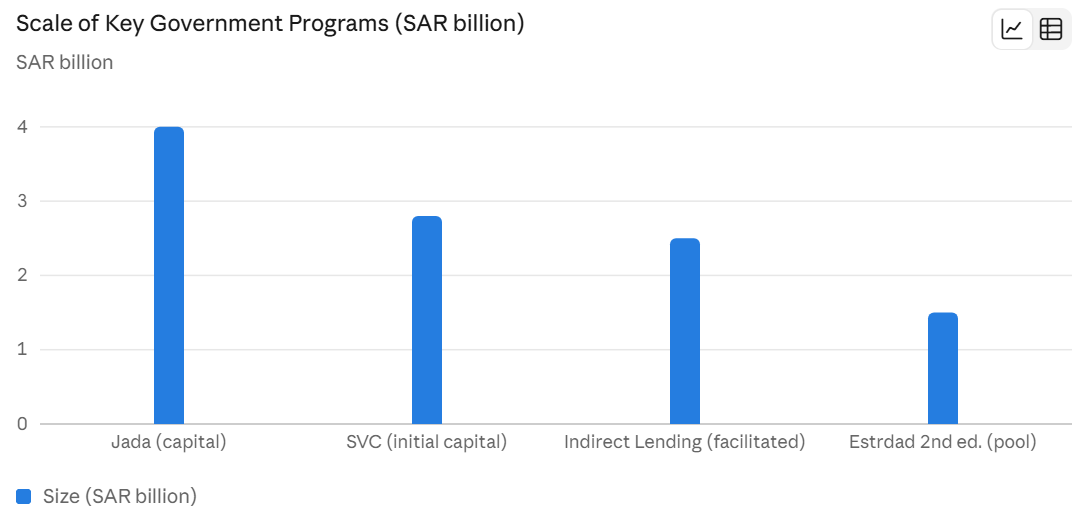
| 1 | Estrdad (2nd edition) | Government fee refunds | Businesses under 3 years old | SAR 1.5 billion pool |
| 2 | Kafalah | Loan guarantees | Founders without collateral | SAR 67.7 billion guaranteed (early-2022 report) |
| 3 | Saudi Venture Capital Company | Equity and fund investment | Seed to growth ventures | SAR 2.8 billion initial capital |
| 4 | Jada Fund of Funds | Fund-of-funds capital | VC-backed ventures | SAR 4 billion starting capital |
| 5 | SME Bank | Business financing | Operating SMEs | Co-hosted Funding Week, May 2026 |
| 6 | Indirect Lending Initiative | Lower-cost loans via finance companies | Small borrowers | SAR 2.5 billion facilitated |
| 7 | Saudi Industrial Development Fund | Long-term industrial loans | Manufacturing founders | Suits capital-heavy projects |
| 8 | Social Development Bank | Small, affordable financing | Micro and idea-stage founders | Modest ticket sizes |
| 9 | HRDF (Hadaf) | Hiring and training support | Teams hiring Saudi talent | Programs change often |
| 10 | Mazaya and accelerators | Discounts and mentoring | Pre-seed teams | Non-cash value |
1. Estrdad: Government Fee Refunds
Estrdad is the closest thing to a grant for the typical founder. The second edition, led by Monsha’at, commits SAR 1.5 billion (around $400 million) to refund ten categories of government fees. These include up to 80% of the expatriate labor levy, commercial registration, municipality licenses, Chamber of Commerce subscriptions, and trademark and patent filings.
To qualify, a business must be micro, small or medium, no more than three years old, compliant with Saudization rules, and holding a valid activity license. Registration stays open until the end of 2026, with refunds paid in stages through 2028. The first edition reached over 27,000 establishments and helped create more than 89,000 jobs. Any Saudi Arabia startup still unregistered should treat the year-end deadline as urgent, because a late application means paying fees that a timely one could have recovered.
2. Kafalah: Loan Guarantees
Kafalah does not hand you money; it makes banks comfortable lending to you. The program guarantees a share of an SME loan, which lowers lender risk. That matters for a young company with no collateral and no credit history.
Monsha’at’s funding report, published in early 2022, recorded SAR 67.7 billion guaranteed through Kafalah, which shows how central the scheme has become. You apply through a participating bank rather than directly. For a Saudi Arabia startup that needs working capital or equipment finance, a guaranteed loan is often faster than waiting for a priced equity round.
3. Saudi Venture Capital Company (SVC)
Monsha’at created SVC in 2018 with SAR 2.8 billion (about $750 million) to back venture funds and invest directly in young companies. By the time of that early-2022 report, it had invested about SAR 1.3 billion, mostly through VC funds, plus SAR 166 million of co-investments in startups.
In short, SVC is a core pillar of Saudi Arabia startup funding. Founders usually reach SVC through its portfolio funds or through co-investment beside a lead investor. It also works as a credibility signal: when SVC-backed funds invest, follow-on investors pay attention. A Saudi Arabia startup chasing seed or Series A money should map SVC’s partner funds before pitching cold.
4. Jada Fund of Funds
Jada, owned by the Public Investment Fund, began with SAR 4 billion (about $1 billion). It invests in private equity, venture capital and private debt funds rather than in companies directly. By the end of 2025 it had deployed more than SAR 3.5 billion and supported 47 funds.
In July 2026 it made its first commitment to Growth Catalyst Fund I, a private equity vehicle targeting $200 million for growth-stage Saudi SMEs. Because Jada backs fund managers, founders benefit indirectly, so pitch the managers it funds. Investors studying the Saudi Arabia startup scene should see Jada as the anchor backer keeping domestic funds well capitalized.
5. SME Bank
SME Bank joined Monsha’at to run Funding Week from 3 to 7 May 2026, an event that connected entrepreneurs with more than 30 funding and support entities. Its agenda covered debt and equity pathways and how ready a business is for funding.
Debt suits founders with predictable revenue who want to avoid dilution, and it is a practical Saudi Arabia startup option once monthly sales are steady. Prepare well-kept financials, a clear use of funds and a repayment plan. Watch for the next Funding Week, because each edition lets a Saudi Arabia startup meet many lenders in one place.
6. Indirect Lending Initiative and the Financing Gateway
This Monsha’at initiative enables finance companies to offer cheaper loans to small businesses. The 2022 funding report credits it with facilitating SAR 2.5 billion in loans. The same report describes an online one-stop shop that aggregates lenders and services in a single place.
You apply to a licensed finance company, which passes on the lower cost. It works best for equipment or inventory purchases, where assets back the loan. Compare offers and read the full fee schedule, since the lowest headline rate is not always the cheapest loan. A Saudi Arabia startup with early revenue can use this route alongside Kafalah, which is why many Saudi Arabia startup founders combine both.
7. Saudi Industrial Development Fund (SIDF)
SIDF provides long-term loans to industrial projects, so it matters for hardware, food-tech and manufacturing founders. These projects tend to involve factories and equipment, with longer payback periods than software.
Eligibility, loan size and collateral rules change, so confirm current terms on the fund’s official site before building a financial model. Industrial founders also benefit from the Kingdom’s wider diversification push under Vision 2030, which favors every Saudi Arabia startup building local production. A Saudi Arabia startup in advanced manufacturing can pair SIDF debt with Estrdad refunds to stretch early capital.
8. Social Development Bank
The Social Development Bank focuses on small, affordable financing for micro and home-based founders and young entrepreneurs. Tickets are modest, so this is a seed-stage lifeline for solo founders, women-led businesses and community ventures rather than a route to a large round.
Use it to validate demand before approaching professional investors. A small Saudi Arabia startup that proves traction here becomes far more attractive to later funders. Confirm current loan limits and application steps on the bank’s website, because terms shift. For an idea-stage Saudi Arabia startup, small capital plus free training can be enough to reach first revenue.
9. HRDF (Hadaf) Hiring Support
The Human Resources Development Fund supports employers that hire and train Saudi nationals through wage and training programs. Because Saudization quotas affect every growing company, this support can offset part of the cost of your first hires.
Program names and subsidy levels change often, so check the live catalogue. Founders running a Saudi Arabia startup that is about to hire engineers or sales staff should map eligibility during hiring plans, not afterward.
10. Mazaya, Accelerators and Competitions
Not every benefit is cash. Monsha’at’s Mazaya platform gives startups discounted services from strategic partners, which trims operating costs. Accelerators add mentoring and investor access; Monsha’at graduated 20 university startups from the UBT Accelerator in Jeddah in April 2026. Competitions such as Biban add visibility.
Value these perks in riyals: a year of discounted software, legal and cloud services can equal a small grant. Every Saudi Arabia startup should join early, since access to mentors also improves later applications.
How to Choose the Right Program
| Stage | Start with | Add next |
|---|---|---|
| Idea | Social Development Bank, Mazaya, accelerators | Estrdad |
| Pre-seed and seed | Estrdad, SVC-backed funds | Kafalah |
| Growth | Jada-backed funds, SME Bank | Kafalah, Indirect Lending |
| Industrial | SIDF | Estrdad, HRDF |
For a Saudi Arabia startup, a sensible order is to cut costs first, borrow second and raise equity third. Founders who keep clean licenses, Saudization records and financial statements qualify for more programs and move faster. In practice, a well-organized Saudi Arabia startup can stack Estrdad refunds, a Kafalah-backed loan and a fund investment within the same two years.
What Investors Should Look For
Investors can read these programs as a quality filter. A founder who has secured Estrdad refunds, passed a bank’s Kafalah review or attracted a Jada-backed fund has already cleared checks on compliance and traction. When comparing a Saudi Arabia startup against peers, ask which public programs it uses and whether its cost base reflects them. A Saudi Arabia startup that stacks support wisely usually shows lower burn, cleaner books and a longer runway, all of which improve returns. For limited partners, the growing fund-of-funds layer also offers a lower-risk path into the Saudi Arabia startup market.
Common Mistakes to Avoid
- Missing the Estrdad registration window that closes at the end of 2026.
- Treating loan guarantees as grants, then being surprised by repayment duties.
- Ignoring Saudization requirements until an application is rejected.
- Relying on old figures. Several numbers here come from earlier reports, so verify live terms on official portals before you apply.
Frequently Asked Questions
Does the Kingdom give free grants to startups?
Rarely for a Saudi Arabia startup. Most support comes as refunds, guarantees, fund investments, discounted services or subsidized loans.
Can foreign founders apply?
It depends on your legal structure and the program. Some schemes require a registered Saudi entity or Saudi capital, so confirm with the program owner.
What is the most urgent deadline?
Estrdad registration closes at the end of 2026, and eligible businesses must be no older than three years.
Final Thoughts
The best saudi arabia startup grants 2026 are really a toolkit, and the smartest Saudi Arabia startup founders use several at once. Start with Estrdad, add guaranteed debt, then pursue fund backing as traction grows. Whether you run a Saudi Arabia startup or invest in one, this Saudi Arabia startup funding map only helps if you verify terms on official sites, apply early and keep your paperwork spotless.