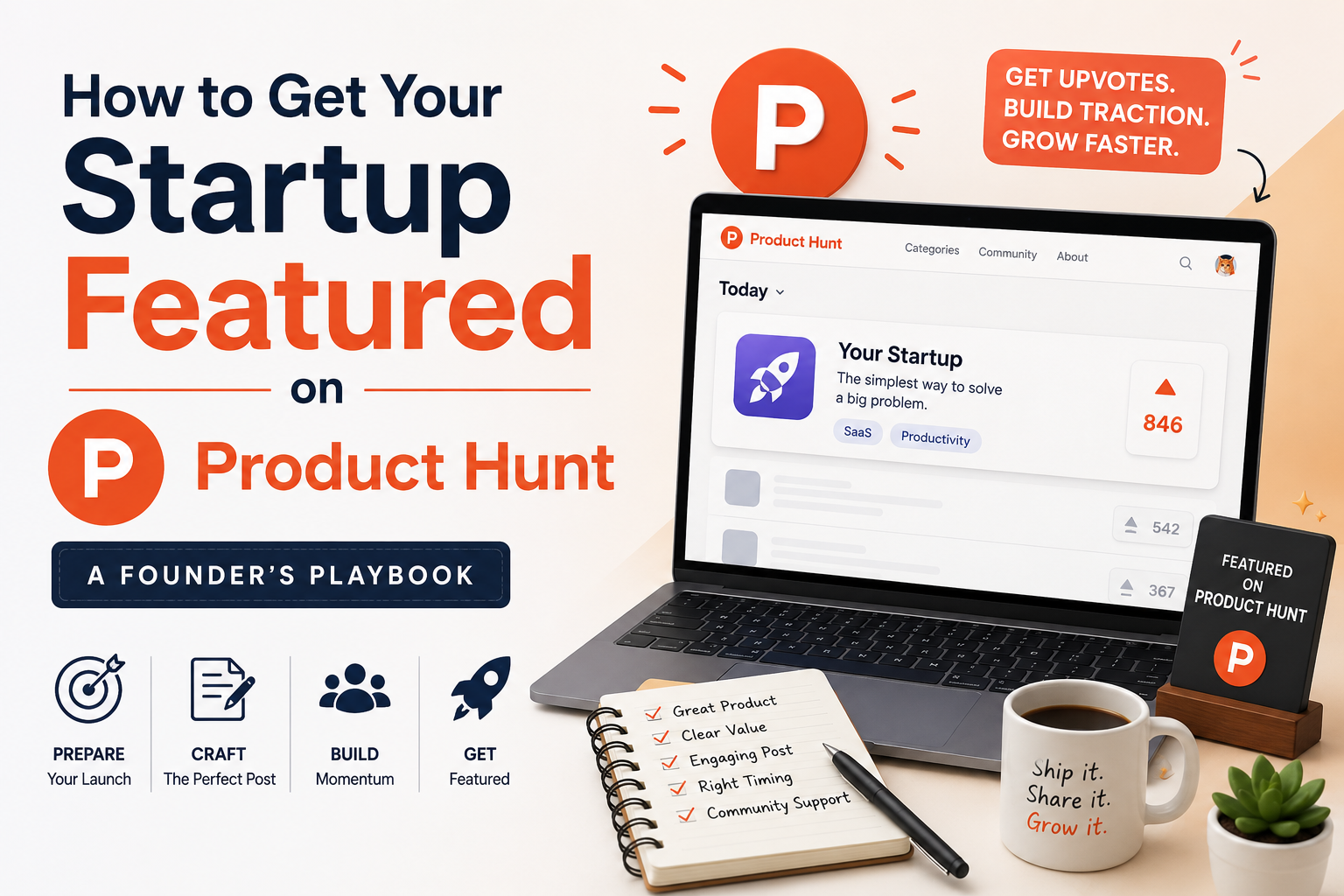
Every week, hundreds of new products go live on Product Hunt, and only a handful climb into the daily leaderboard that investors, journalists, and early adopters actually scroll through. The founders who land there rarely got there by accident. They treated the launch as a project with its own timeline, owner, and success metrics — not a single button they pressed and hoped for the best. This guide breaks down exactly how to launch on Product Hunt, from the weeks of preparation before you go live to the follow-up work that turns a good launch day into lasting momentum.
Why Product Hunt Still Matters for Startups
Product Hunt has evolved a lot since its early days as a simple link-sharing community, but its core value for startups hasn’t changed: it puts your product in front of a concentrated audience of builders, early adopters, and investors on a single day. A strong showing can mean a spike in signups, a flood of user feedback, and — for founders raising capital — a credibility signal that shows up in due diligence conversations.
That said, the platform rewards preparation far more than luck. Algorithms favor genuine engagement over vote count alone, which means a launch strategy built entirely around asking friends to click upvote tends to underperform compared to one built around a real community and a compelling story.
| What Product Hunt Offers | Why It Matters to Founders |
|---|---|
| Early-adopter traffic | Fast, honest product feedback before a wider release |
| Investor visibility | Many VCs and angels browse daily rankings for deal flow |
| Press pickup | Tech journalists monitor top launches for story leads |
| SEO and backlinks | A permanent product page with links back to your site |
| Social proof | Badges and rankings you can reuse in pitch decks and landing pages |
Timing Your Launch: When to Go Live
Launch day activity on Product Hunt tends to cluster around the start of the work week, when there’s a fresh pool of daily votes and less competition from Friday’s leftover traffic. Tuesday and Wednesday are widely considered the strongest windows because engagement is high but the number of competing launches is more manageable than on Monday.
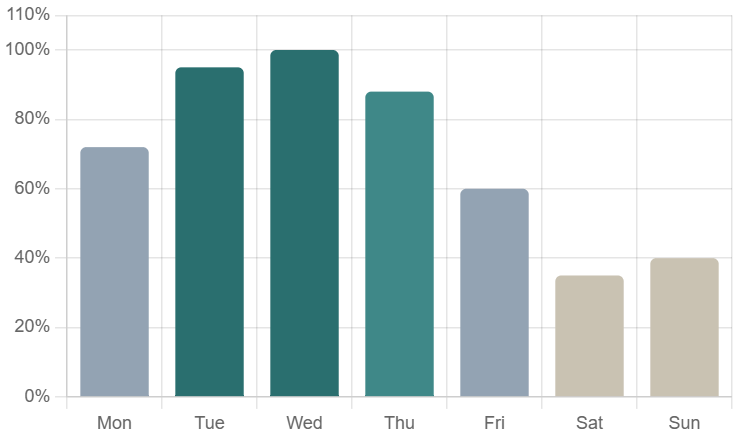
Estimated relative engagement by launch day (illustrative benchmark, not official Product Hunt data)
Set a Realistic Runway
Most successful launches are planned four to six weeks in advance. That window gives you enough time to line up a hunter if you need one, build a pre-launch page, and warm up your community without letting momentum go stale.
| Timeline | Focus |
|---|---|
| 4–6 weeks out | Finalize product readiness, write launch copy, choose a launch date |
| 2–3 weeks out | Set up a “coming soon” page, start warming your email list and socials |
| 1 week out | Confirm your hunter (if applicable), prep visual assets, brief your team |
| Launch day | Publish at 12:01 AM PT, engage with every comment, share across channels |
| 1–2 weeks after | Follow up with new users, repurpose the launch for press and content |
Step 1: Get Your Product Page Launch-Ready
Your Product Hunt page is often a stranger’s very first impression of your company, so it deserves the same care as your homepage. A tagline that explains the product in under ten words performs far better than a clever phrase that requires context. Pair it with a short, benefit-led description, a gallery of real product screenshots, and — if possible — a 30 to 60 second demo video, since visual content consistently drives higher engagement than text-only listings.
- Tagline: Clear over clever. Say what the product does, not just how it feels.
- First comment: Written by the maker, explaining the “why” behind the product and inviting questions.
- Gallery: Four to six images or a short video showing the product in actual use, not just marketing graphics.
- Pricing clarity: Hunters and commenters often ask about pricing early — answer it before they have to ask.
Founder tip: Draft your maker comment days in advance, not the night before. It’s the single most-read piece of copy on your listing, and it sets the tone for every reply thread underneath it.
Step 2: Decide Whether You Need a Hunter
A “hunter” is an established Product Hunt community member who submits your product on your behalf, lending it some initial visibility from their own followers. Hunters were once considered essential, but the platform has shifted toward rewarding maker-led launches, so a founder posting their own product is no longer a disadvantage. The bigger factor is whether the person publishing the listing already has an engaged following that will show up on day one.
When a Hunter Still Helps
- You’re launching in a competitive category and want extra early votes.
- You don’t yet have a personal Product Hunt following.
- You want a warm introduction to the broader maker community.
Step 3: Build Your Pre-Launch Audience
The biggest predictor of a strong launch day isn’t what happens on Product Hunt itself — it’s the audience you bring with you. A pre-launch landing page that collects emails, paired with consistent posts on X, LinkedIn, and relevant Slack or Discord communities, gives you a base of people ready to engage the moment you go live. Founders who wait until launch morning to tell anyone rarely see the same traction as those who spend weeks building anticipation.
- Create a simple “notify me on launch day” page two to three weeks out.
- Engage authentically in Product Hunt’s community before your own launch — upvote and comment on other products.
- Personally message early users, beta testers, and advisors with a direct link and a genuine ask.
- Avoid vote manipulation or coordinated “upvote and comment” pods — Product Hunt actively filters for this and can penalize listings that trigger it.
Step 4: Win the Launch Day Itself
Once your listing goes live, the first few hours set the tone for the rest of the day. Product Hunt’s ranking system weighs the pace and quality of engagement, not just the raw vote total, so a slow trickle of thoughtful comments throughout the day tends to outperform one big spike followed by silence.
| Time Block | Priority Action |
|---|---|
| 12:01 AM – 6:00 AM PT | Publish, post your maker comment, notify your closest supporters |
| Morning | Share across email, socials, and relevant communities |
| Midday | Reply to every comment personally — this is what most differentiates top launches |
| Afternoon | Share behind-the-scenes updates, thank early supporters publicly |
| Evening | Post a wrap-up thank you and highlight standout feedback |
What actually moves the ranking: Genuine comments and replies, not just upvotes. A listing with 200 votes and 60 real comments frequently outperforms one with 400 votes and five comments, because Product Hunt’s algorithm treats sustained conversation as a stronger quality signal than vote count alone.
Step 5: Avoid the Mistakes That Sink Launches
| Common Mistake | Why It Hurts |
|---|---|
| Asking for “just an upvote” in bulk messages | Reads as inauthentic and can trigger platform filtering |
| Launching without a working product | Commenters test links immediately; broken demos kill momentum fast |
| Ignoring comments | Engagement, not silence, is what keeps a listing visible through the day |
| No visual assets | Text-only listings get scrolled past in a visually driven feed |
| Picking a random launch date | Competing against a major product launch the same day splits attention |
What Investors Actually Look For
Investors who browse Product Hunt aren’t usually chasing the #1 badge itself — they’re reading the signal underneath it. A high ranking with substantive comments suggests genuine product-market interest. A page with a clear problem statement, an articulate maker comment, and visible user enthusiasm can do real work in an early conversation, sometimes prompting an investor to reach out directly. Treat your listing as a piece of fundraising collateral, not just a marketing stunt, and write it accordingly.
After the Launch: Turning One Day Into Lasting Growth
The 24 hours on Product Hunt’s homepage are only the beginning. The most valuable work often happens in the two weeks that follow, when you convert a temporary traffic spike into retained users and long-term visibility.
- Follow up with new signups within 48 hours while the product is still top of mind.
- Repurpose the launch into a blog post, case study, or newsletter recap.
- Reach out to press who cover your category, using the launch ranking as a credibility hook.
- Add the badge to your homepage and pitch deck if you finished in a top position.
- Review the feedback left in comments — it’s often some of the most honest product input you’ll get in one place.
Frequently Asked Questions
Do I need a hunter to launch on Product Hunt?No. Maker-led launches are common and perform well, especially if you already have an engaged audience.What time should I launch on Product Hunt?Listings go live at 12:01 AM Pacific Time, and launching right at that window gives your product the longest possible runway to accumulate votes and comments during the 24-hour cycle.How many upvotes do I need to reach the top of the leaderboard?It varies significantly by day and category, so treat any specific number as a rough guide rather than a guarantee — consistent, genuine engagement matters more than chasing a target vote count.Can I relaunch a product on Product Hunt?Yes, especially after a major update or rebrand, though it’s best used sparingly so each relaunch still feels newsworthy.
Measuring Success Beyond the Leaderboard
Ranking position is the easiest number to fixate on, but it’s rarely the metric that matters most six months later. Before launch day, decide which outcomes you’re actually optimizing for, then track them separately from your Product Hunt rank so a quiet leaderboard finish doesn’t overshadow a genuinely successful launch.
| Metric | What It Tells You |
|---|---|
| Signup-to-activation rate | Whether launch-day traffic converts into people who actually use the product |
| Referral traffic post-launch | How much of the spike carries over once the listing drops off the homepage |
| Qualitative comment feedback | Where the product’s messaging is landing or falling flat |
| Investor or press inbound | Whether the launch generated conversations beyond votes |
| 7-day retention of new users | The clearest signal of whether the launch attracted the right audience |
A launch that finishes fifth for the day but converts a third of its signups into active users has done more for the business than one that hits #1 with a wave of curious but disengaged visitors. Keep both sets of numbers in view, and resist the temptation to judge the entire effort by the badge alone.
Final Thoughts
Learning how to launch on Product Hunt well comes down to treating it as a coordinated campaign rather than a single click. The founders who consistently do well are the ones who prepare their page carefully, build a real audience before launch day, show up in the comments the entire day, and keep working the momentum long after the countdown clock hits zero. Do that, and Product Hunt becomes less of a lottery ticket and more of a repeatable growth channel for your startup.