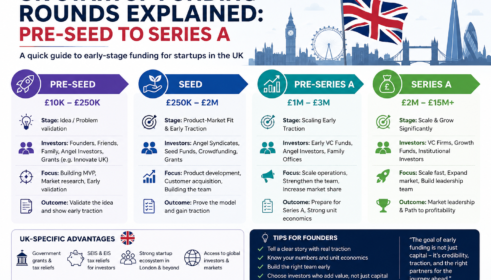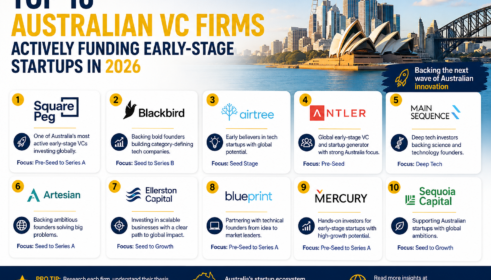

If you’re a founder searching for a UK startup accelerators list, or an investor trying to map out where the smart money is flowing in Britain right now, you’ve landed in the right place. The UK remains Europe’s largest and most mature startup market, and 2026 has brought fresh momentum: strong AI-driven deal flow, a wave of university spinouts, and renewed government backing for regional innovation hubs outside London. This guide breaks down the accelerators, incubators, and venture capital firms every founder and investor should have on their radar this year.
Why the UK Startup Ecosystem Still Leads Europe
Despite a tougher fundraising climate for venture funds themselves, UK startups pulled in roughly $17 billion in capital in 2025 — the strongest year since 2022, and close to a third of all European venture funding. London continues to anchor the ecosystem, but activity has spread meaningfully into Manchester, Bristol, Oxford, Cambridge, and Liverpool, driven by university spinout pipelines and a new generation of regionally focused accelerator programmes.
Artificial intelligence remains the dominant theme. Some of the largest European funding rounds of the past year came out of London, including major raises for AI infrastructure and drug-discovery ventures. Fintech, deeptech, and health tech continue to be the other pillars supporting the ecosystem, helped along by a dense network of accelerators and a deep bench of experienced venture investors who understand how to take a company from idea to Series A and beyond.
For founders, this means there’s no shortage of structured support available — the challenge is figuring out which programme actually fits your stage, sector, and growth ambitions. For investors and researchers, understanding this landscape is essential to spotting where the next generation of UK unicorns will come from.
Top UK Startup Accelerators to Know in 2026
Accelerators differ from pure funding rounds in that they combine capital with mentorship, structured curriculum, and warm introductions to follow-on investors. Here are the programmes founders consistently rank at the top of any UK startup accelerators list this year.
Entrepreneur First takes a genuinely different approach: instead of accepting existing teams, it recruits ambitious individuals — often technical specialists without a co-founder or even an idea yet — and helps them find a match and build a company from scratch. Acceptance is highly competitive, but the model has produced standout companies in insurance-tech and AI, making it the natural starting point for solo technical founders who want to build something big but haven’t found their team yet.
Techstars London, the UK arm of the global Techstars network, runs a three-month cohort combining hands-on mentorship with access to a worldwide alumni base spanning thousands of companies. The programme typically provides a modest upfront investment plus an optional larger convertible note, and its biggest value lies less in the cheque and more in the density of its global investor and founder network.
Seedcamp is often described as “Europe’s Y Combinator.” Rather than running a rigid cohort model, it operates as a pre-seed and seed-stage investor with ongoing, long-term founder support. Its portfolio includes some of the continent’s best-known tech successes, and it has a reputation for backing ambitious founders early and staying close to them through multiple funding rounds.
Founders Factory blends a venture studio (building companies from the ground up) with a traditional accelerator track for existing startups. What sets it apart is its corporate partner network — companies work directly with major enterprise partners across retail, insurance, and other sectors, giving portfolio startups a shortcut to pilot customers and distribution that’s hard to replicate elsewhere.
Bethnal Green Ventures (BGV) positions itself as Europe’s leading early-stage “tech for good” investor, backing founders using technology to tackle social and environmental problems. Its cohort programme combines weeks of intensive learning with tailored coaching, plus follow-on investment support from pre-seed through Series A.
Antler UK runs a pre-team, pre-idea model similar in spirit to Entrepreneur First, helping individual founders find co-founders and validate ideas before writing a first cheque, typically as part of a multi-week London cohort.
Startupbootcamp UK takes a vertical-specific approach, running sector-focused cohorts (fintech, smart cities, IoT) with a global network of industry mentors — useful for founders who want deep sector expertise rather than a generalist programme.
Beyond these flagship names, dozens of smaller and regionally focused programmes are active in 2026, including sector specialists like Insurtech Gateway and DigitalHealth.London, and city-specific programmes such as Liverpool’s Baltic Ventures. A number of these accelerators also serve as official endorsing bodies for the UK’s Innovator Founder visa, which matters if you’re a non-UK founder planning to relocate and build here.
Top UK Incubators Worth Considering
Incubators tend to run longer, offer more flexible timelines than fixed-cohort accelerators, and are frequently tied to universities or regional economic development bodies.
SETsquared Partnership, a collaboration between the universities of Bath, Bristol, Cardiff, Exeter, Southampton, and Surrey, is consistently ranked among the world’s top university-affiliated business incubators. It focuses on commercializing deep tech and research-driven startups, giving founders access to lab facilities, academic expertise, and patient, longer-term support that a three-month accelerator sprint simply can’t offer.
Regional incubators tied to Oxford, Cambridge, and Imperial College London continue to feed a steady stream of deeptech and life sciences spinouts into the broader ecosystem, often in partnership with the VC firms below. These programmes are typically less about pitch competitions and more about helping researchers translate IP into a commercially viable company — a slower, more technical path to market that suits hardware, biotech, and advanced-materials founders far better than a rapid-fire accelerator format.
For founders who’ve already raised some initial capital or generated early revenue, hybrid programmes such as Hotbed offer a lighter-touch, flexible alternative — useful once you’ve outgrown the “idea stage” support that most accelerators are built for.
Leading UK Venture Capital Firms in 2026
Once a startup graduates from an accelerator or incubator, the next stop is usually institutional venture capital. Knowing which firm invests at which stage — and in which sector — saves founders months of wasted outreach.
Atomico, founded by a former Skype executive, partners with European technology founders from seed stage onward and has built one of the largest growth-stage funds in the region, giving it firepower to back companies all the way from early rounds through to pre-IPO growth capital.
Index Ventures maintains one of the largest and most active London offices among global venture firms, investing across consumer, enterprise, and fintech categories, with a fund war chest in the billions funded largely by returning limited partners.
Balderton Capital is one of the most established early-stage investors in Europe, having split its most recent fund into separate early-stage and growth-stage vehicles so it can support companies from their first institutional round all the way through scale-up.
Octopus Ventures is a multi-stage investor with one of the deepest portfolios in the UK, spanning health, fintech, deep tech, and consumer sectors, and it has backed several hundred companies to date.
LocalGlobe, alongside its growth-stage sister fund Latitude, has one of the longest track records in British venture capital, with roots in some of the UK’s foundational tech companies and a strong focus on early-stage and impact-driven founders.
Seedcamp doubles as both accelerator and investor, making it one of the few firms with genuine reach across the entire founder journey from first cheque to growth rounds.
Notion Capital specializes specifically in B2B SaaS, making it a natural target for enterprise software founders, while Passion Capital focuses on early-stage UK digital media and technology companies with a hands-on, founder-first approach. Molten Ventures rounds out the tier as a growth-focused investor backing later-stage tech companies across digital health, AI, and SaaS.
On the AI front specifically, Atomico, Index, Balderton, Hoxton Ventures, and Air Street Capital have emerged as the go-to specialists, increasingly co-investing alongside government-backed vehicles focused on sovereign AI capability.
How to Choose the Right Programme or Investor
With well over a hundred active accelerators and nearly two hundred VC firms operating in the UK, the brand name matters far less than fit. Before applying anywhere, founders should weigh:
- Stage fit — are you pre-idea, pre-product, MVP-ready, or already generating revenue? Programmes like Entrepreneur First and Antler suit pre-team founders, while Techstars and Founders Factory expect a working product.
- Sector relevance — generalist accelerators offer flexibility, but vertical specialists bring deeper customer and mentor networks if you’re in fintech, health tech, or climate.
- Equity terms — know exactly how much equity or convertible debt you’re giving up, and what specific support justifies that cost beyond the cheque itself.
- Geography — London remains the hub, but Manchester, Bristol, and Oxford increasingly offer comparable support with a lower cost of living and less competition for attention.
- Alumni outcomes — look at who has gone through a programme before you, and where those companies ended up, rather than relying on the pitch deck alone.
Application Tips That Actually Move the Needle
Getting into a competitive UK accelerator or catching the attention of a top-tier VC isn’t just about a polished deck. A few practical habits separate founders who get meetings from founders who get ignored:
- Warm intros beat cold applications. Most accelerators and funds receive far more applications than they can seriously review. A short, specific introduction from a portfolio founder, mentor, or mutual connection almost always outperforms a cold form submission.
- Lead with traction, not vision. Even at pre-seed, investors respond to evidence — waitlist numbers, early user interviews, a working prototype — more than a big-picture story with no proof points attached.
- Tailor the pitch to the stage of the programme. A deck built for Entrepreneur First’s talent-first model won’t land the same way at Techstars, where a working product and early metrics matter far more.
- Research who actually writes the cheque. Many VC firms operate multiple funds across different stages; pitching a growth-stage partner with a pre-seed idea wastes everyone’s time and burns a relationship you may need later.
- Follow up with substance, not just persistence. A short update sharing a new metric, hire, or customer win keeps you on an investor’s radar far better than a generic check-in email.
Frequently Asked Questions
What’s the difference between a UK accelerator and an incubator? Accelerators typically run fixed, intensive programmes of three to six months, often in exchange for equity, and end with a demo day. Incubators tend to run longer, more flexible timelines with less rigid structure, and are frequently affiliated with universities or regional economic development bodies rather than tied to a strict cohort calendar.
Do UK accelerators take equity? Most do, typically in the range of 6% to 10% in exchange for a modest cash investment, though a handful of programmes — particularly some regional and government-backed initiatives — offer non-dilutive grants instead.
Can non-UK founders apply? Yes. Several of the programmes listed above, including Techstars London and Entrepreneur First, regularly accept international founders and, in some cases, act as endorsing bodies for the UK’s Innovator Founder visa route, though visa sponsorship requirements vary by programme.
Which sector attracts the most UK venture capital right now? Artificial intelligence continues to dominate deal volume and total capital raised, followed closely by fintech and health tech, with deeptech and climate-focused startups also drawing significant investor interest heading into the second half of 2026.
Final Thoughts
The UK’s 2026 startup ecosystem offers founders an unusually rich menu of accelerators, incubators, and venture capital firms — arguably the deepest in Europe. The real work isn’t finding a UK startup accelerators list; it’s matching your stage, sector, and ambition to the right combination of structured support and capital. Whether you’re a technical founder without a co-founder yet, a research team ready to spin out of a university lab, or a growth-stage company chasing your next round, there’s a well-established path in the UK built specifically for you — and for the investors who fund the businesses that come out the other side.