
If you’re weighing up the best city to start a business UK, you’ve probably already narrowed it down to three contenders: London, Manchester, and Edinburgh. Each one shows up in every “top UK startup hub” ranking, but they serve very different kinds of founders. London gives you unmatched access to capital and customers at a steep price. Manchester offers a rapidly maturing scene with room to breathe. Edinburgh combines a compact, tightly connected ecosystem with some of the UK’s strongest university spin-out activity.
This guide breaks the decision down into the factors that actually move the needle for a new business: startup costs, funding access, talent pools, tax and grant support, quality of life, and sector strengths. By the end, you should have a clear sense of which city fits your stage, budget, and industry.
Quick Answer: Which City Wins?
There isn’t a single “best” answer, because the right city depends on what your business needs most.
- Choose London if you’re building a venture-backed startup that needs investor density, enterprise clients, or a global talent pool from day one.
- Choose Manchester if you want strong infrastructure and a growing tech and creative scene at roughly half of London’s operating costs.
- Choose Edinburgh if you’re in fintech, life sciences, or a research-driven field and want tight-knit support from universities, accelerators, and public funding bodies.
Now let’s look at why.
Comparison at a Glance
| Factor | London | Manchester | Edinburgh |
|---|---|---|---|
| Average office rent (per desk/month) | £600–£900 | £250–£400 | £280–£420 |
| Access to venture capital | Highest in UK | Growing steadily | Strong in fintech/life sciences |
| Talent pool size | Largest, most diverse | Large, fast-growing tech scene | Smaller but highly skilled |
| Cost of living | Highest | Mid-range | Mid-range |
| Business rates relief | Standard reliefs apply | Enhanced local schemes | Scottish-specific reliefs |
| Time to key transport hub | N/A (is the hub) | 2 hrs to London by rail | 4.5 hrs to London by rail |
| Best suited sectors | Fintech, media, professional services | Tech, digital, advanced manufacturing | Fintech, life sciences, data/AI |
1. Cost of Starting a Business
Cost is usually the first filter founders apply, and it’s where the three cities diverge most sharply.
London remains the most expensive place in the UK to launch. Office space, salaries, and general overheads run well above the national average, and even coworking desks in secondary boroughs carry a premium compared to other major cities. For a bootstrapped founder, this can eat into runway fast. The upside is that London’s market size and client density often justify the spend for businesses selling into finance, media, or professional services.
Manchester has built a reputation as a lower-cost alternative without sacrificing infrastructure. Office rents typically sit at a fraction of central London prices, and salary expectations, while rising, are still more manageable for early-stage hiring. This makes Manchester attractive for founders who need to stretch seed funding further or who are self-funding in the early months.
Edinburgh sits in a similar cost bracket to Manchester for office space, though housing costs in the city centre have climbed noticeably in recent years due to tourism and limited supply. For founders prioritising a smaller, walkable city with lower day-to-day business overheads than London, Edinburgh still compares favourably.
Bottom line: if capital efficiency is your priority, Manchester or Edinburgh will stretch your budget significantly further than London.
2. Access to Funding and Investors
Funding access is where London’s advantage is hardest to replicate.
London hosts the majority of the UK’s active venture capital firms, along with most of the country’s angel investment networks and corporate venture arms. Being physically close to investors, or at least in the same city for warm introductions and follow-up meetings, still matters for early-stage fundraising, even in a world of remote pitching. London-based startups also tend to have easier access to larger later-stage rounds, since many growth-equity funds are headquartered there.
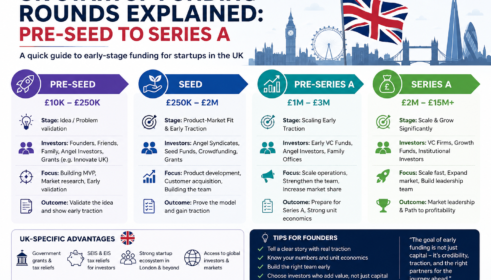
Manchester’s funding ecosystem has matured considerably, helped by regional growth funds, a growing number of Manchester-based angel syndicates, and increasing attention from London VCs willing to invest outside the capital. It’s not yet at London’s scale, but for seed and pre-seed rounds in tech and digital sectors, Manchester founders now have realistic local options.
Edinburgh punches above its size in specific sectors. Scotland’s public investment bodies actively co-invest alongside private funds, and the city’s fintech and life sciences clusters attract specialist investors who understand those industries deeply. If your business fits one of Edinburgh’s core strengths, you may find more informed, sector-specific capital than in a generalist market.
Bottom line: London wins on volume and breadth of capital; Edinburgh wins on depth within its specialist sectors; Manchester offers a strong middle ground for tech-focused founders.
3. Talent and Hiring
A great idea needs a great team, and each city offers a different hiring proposition.
London’s labour market is the largest and most diverse in the UK, with deep benches of experienced hires across nearly every function, from engineering to marketing to finance. The trade-off is intense competition for talent, which pushes salaries up and can slow hiring timelines as candidates weigh multiple offers.
Manchester benefits from several large universities producing strong graduate talent, plus an influx of professionals relocating from London for lower living costs. The city’s growing tech and media sectors, anchored partly by major broadcasters and digital agencies based there, have built a genuine pipeline of experienced hires in those fields.
Edinburgh has a smaller overall labour pool but an unusually high concentration of specialist skills, particularly in data science, computational biology, and financial technology, thanks to its research-intensive universities. For deep-tech or science-based startups, this specialism can matter more than raw headcount availability.
Bottom line: London offers scale, Manchester offers a growing generalist pipeline at lower cost, and Edinburgh offers concentrated specialist expertise.
4. Tax Incentives, Grants, and Business Support
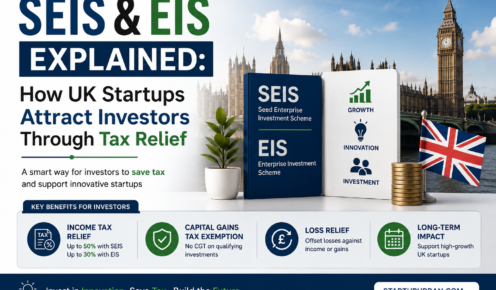
All three cities sit within the UK’s national tax framework, including R&D tax credits and the Enterprise Investment Scheme, but local and devolved support varies.
London offers access to numerous accelerator programmes, borough-specific grants, and enterprise zones with business rates relief, though competition for these programmes is fierce given the sheer number of applicants.
Manchester benefits from Greater Manchester Combined Authority initiatives aimed at boosting local business growth, alongside sector-specific innovation grants tied to the region’s digital and advanced manufacturing strategies.
Edinburgh, operating under the Scottish Government’s separate business support framework, gives founders access to schemes run by Scottish Enterprise, along with reliefs under the Small Business Bonus Scheme that can meaningfully reduce costs for smaller premises. Scotland’s approach to startup support is generally seen as accessible for early-stage and university-linked ventures.
Bottom line: check eligibility carefully, since Scottish schemes differ structurally from those in England, and Edinburgh founders should budget time to understand the separate application processes.
5. Quality of Life and Founder Wellbeing
Building a company is a long game, and where you live affects how sustainably you can run it.
London offers unmatched cultural and social opportunities, but longer commutes, higher living costs, and a faster pace can add pressure during an already demanding startup journey.
Manchester has built a strong reputation for balancing city energy with a lower cost of living, shorter commutes, and a well-regarded food, music, and nightlife scene that founders often cite as a reason for staying long-term.
Edinburgh offers a distinctly different pace: a compact, walkable city with a strong festival culture, access to nearby countryside, and a slower rhythm than either London or Manchester, which some founders find better for long-term sustainability.
Bottom line: if founder burnout risk is a real concern for you, Manchester and Edinburgh both offer a gentler day-to-day lifestyle than London.
6. Which Sectors Thrive Where
Choosing a city that matches your industry can shortcut a lot of early networking and hiring effort.
- London: fintech, professional services, media and advertising, enterprise SaaS, fashion and retail
- Manchester: digital and creative tech, advanced manufacturing, e-commerce, health tech
- Edinburgh: fintech, life sciences, data and AI, gaming, university-linked deep tech
If your business sits squarely within one of these clusters, that city likely offers built-in advantages in hiring, networking events, and investor familiarity with your space.
How to Decide: A Simple Framework
Rather than picking a city on reputation alone, work through these four questions:
- What stage is your business at? Pre-revenue and bootstrapped founders often benefit most from Manchester or Edinburgh’s lower costs. Later-stage or venture-backed founders may need London’s investor density.
- Who are your customers? If you’re selling to large enterprises or financial institutions, proximity to London can shorten sales cycles.
- What does your team need? Specialist scientific or technical talent may be easier to find in Edinburgh; broader generalist hiring is easier in London or Manchester.
- What can you afford to burn? Model your runway in each city using realistic salary and rent figures before committing to a lease or relocation.
Frequently Asked Questions
Is Manchester cheaper than London for startups? Yes, Manchester’s office rents and general operating costs are typically well below London’s, making it a common choice for founders looking to extend their runway.
Does Edinburgh have good startup funding? Edinburgh has strong sector-specific funding, particularly in fintech and life sciences, supported by Scottish Enterprise and specialist investors, though overall deal volume is lower than London’s.
Which UK city is best for a tech startup? London offers the largest tech talent pool and investor base, Manchester offers a fast-growing, lower-cost tech scene, and Edinburgh excels for data-driven and deep-tech startups.
Can I get business grants outside London? Yes. Both Manchester (through the Greater Manchester Combined Authority) and Edinburgh (through Scottish Enterprise) offer regional grants and support schemes distinct from London-based programmes.
Final Thoughts
There’s no universally “best city to start a business UK.” London remains the strongest choice for founders who need deep capital markets and a vast talent pool and can absorb higher costs. Manchester offers a compelling balance of infrastructure, talent, and affordability for founders who want to move fast without a London-sized budget. Edinburgh rewards founders in specialist sectors with a tightly connected, research-driven ecosystem and distinct funding routes through Scotland’s support bodies.
The smartest move is to map your business stage, sector, and budget against what each city genuinely offers, rather than defaulting to the most talked-about option. Whichever city you choose, the fundamentals stay the same: know your numbers, build near your customers or your talent, and pick a place you can sustain for the years it takes to build something real.