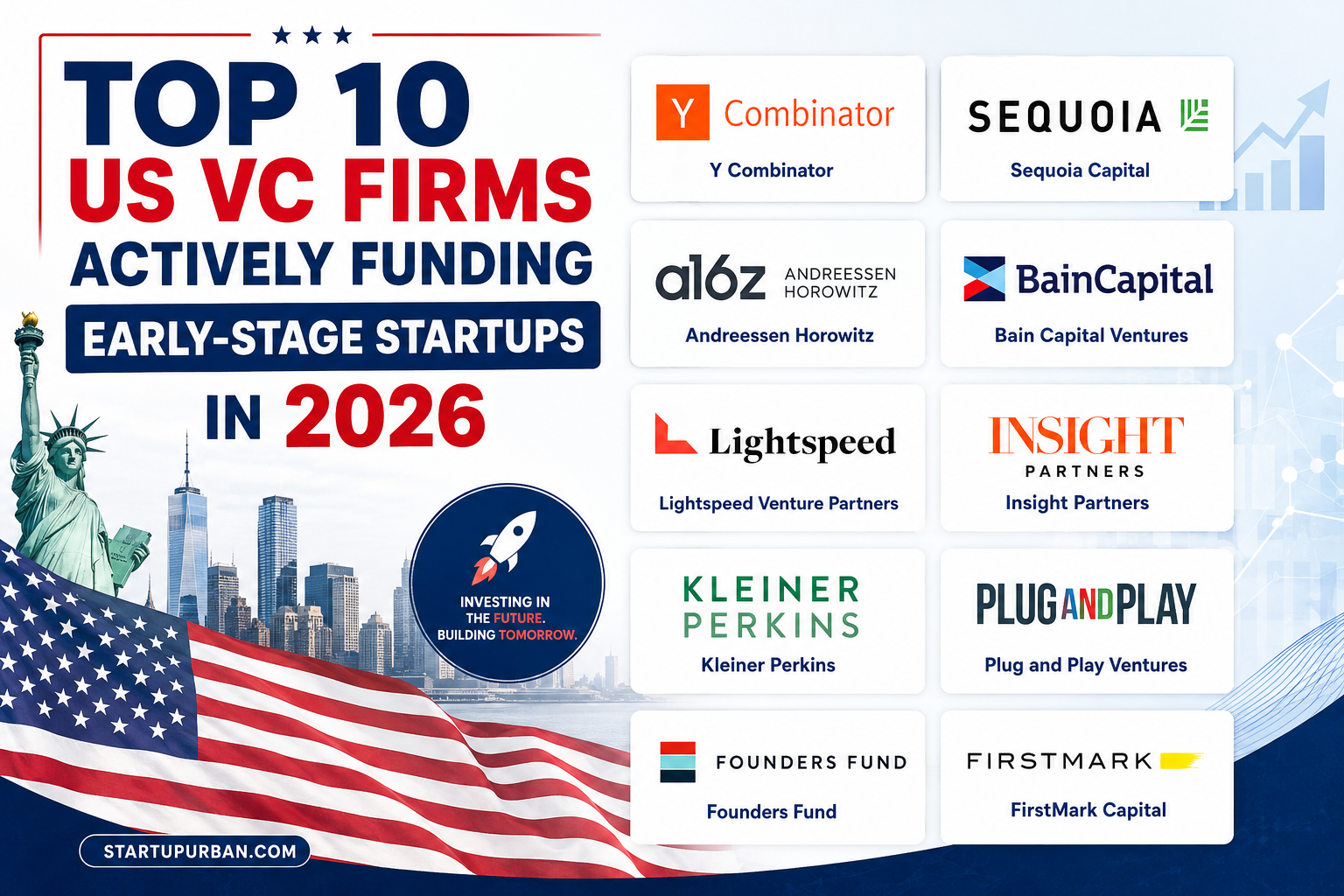
Raising a first institutional check is harder in 2026 than it was three years ago. Investors want traction, not just a deck, and the bar for a “yes” keeps climbing. Yet capital is still flowing — US startups pulled in roughly $274 billion in 2025 alone, and early-stage deal activity has picked back up as several major funds launched dedicated seed and Series A vehicles this year. For founders trying to figure out where to spend their limited outreach energy, and for anyone tracking the venture market, knowing which US VC firms are writing checks right now — and how they’re structured — makes the search far more efficient.
This guide breaks down ten of the most active US VC firms currently funding pre-seed, seed, and Series A companies, along with the data points (check size, AUM, sector focus) that matter most when you’re deciding who to pitch first.
Why Early-Stage Funding Activity Matters in 2026
The venture landscape has consolidated around a smaller number of firms writing a larger share of early checks. AI-related companies captured roughly half of all global venture funding in 2025, and California alone absorbed close to two-thirds of total US venture dollars. That concentration means founders outside of AI or outside the Bay Area often have to work harder to get noticed — which makes a clear map of active US VC Firms even more valuable.
At the same time, several large multi-stage funds have carved out fresh early-stage pools of capital specifically to compete for the next generation of category-leading companies before they reach Series B. That shift is one of the defining stories of the current fundraising cycle, and it’s reshaping how founders should sequence their outreach.
Top 10 US VC Firms Funding Early-Stage Startups — Quick Reference Table
| Rank | Firm | Founded | Primary Stage | Typical First Check | Notable Sectors |
|---|---|---|---|---|---|
| 1 | Y Combinator | 2005 | Pre-seed / Seed | $125K–$500K | SaaS, AI, Fintech, Consumer |
| 2 | Sequoia Capital | 1972 | Seed / Series A | $200K–$5M | AI, Enterprise, Consumer |
| 3 | Andreessen Horowitz (a16z) | 2009 | Seed / Series A | $500K–$15M | AI, Crypto, Fintech, Bio |
| 4 | Accel | 1983 | Seed / Series A | $500K–$10M | SaaS, Security, Infrastructure |
| 5 | Bessemer Venture Partners | 1911 | Seed / Series A | $500K–$8M | Cloud, Healthtech, Fintech |
| 6 | Lightspeed Venture Partners | 2000 | Seed / Series A | $500K–$10M | Enterprise, AI, Consumer |
| 7 | General Catalyst | 2000 | Seed / Growth | $1M–$12M | Healthtech, AI, Fintech |
| 8 | Founders Fund | 2005 | Seed / Multi-stage | $1M–$15M | Deep Tech, Aerospace, Bio |
| 9 | First Round Capital | 2004 | Pre-seed / Seed | $250K–$3M | SaaS, Consumer, Fintech |
| 10 | Benchmark | 1995 | Series A | $3M–$15M | Marketplaces, SaaS, Consumer |
Snapshot of active US VC Firms currently deploying early-stage capital. Check sizes are approximate and vary by round dynamics.
The Largest Players by Balance Sheet Size
Not every firm on the early-stage list is a mega-fund, and not every mega-fund still writes small checks. The chart below shows how asset size compares across a handful of the largest US VC Firms that also maintain active early-stage or opportunity funds.
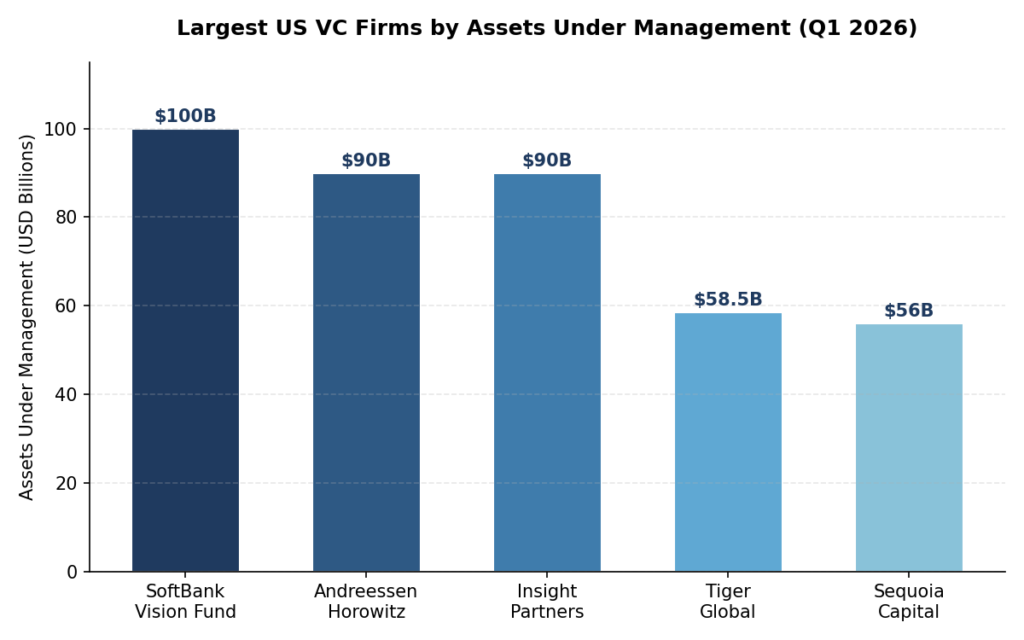
Combined assets under management give a sense of how much dry powder these US VC Firms have available for follow-on rounds — an important signal for founders who want an investor who can support them past Series A.
Profiles: The Ten Firms Worth Knowing
1. Y Combinator
Still the single most efficient front door into the top tier of Silicon Valley investors. Y Combinator runs cohort-based batches that end in a demo day, and its standard deal has become the reference point that many other US VC Firms use when structuring their own pre-seed offers. Alumni access to the YC network is often as valuable as the capital itself.
2. Sequoia Capital
Sequoia rebuilt its early-stage practice with a dedicated Series A fund and a smaller companion seed vehicle, signaling renewed appetite for first checks after several years of growth-stage focus. The firm remains one of the most recognizable names among US VC Firms and continues to back category leaders across AI, enterprise software, and consumer technology.
3. Andreessen Horowitz (a16z)
a16z pairs traditional check-writing with an in-house platform team covering recruiting, marketing, policy, and go-to-market support. Its scale — tens of billions in assets — lets it participate meaningfully from seed through late growth, which is part of why founders frequently name it among the most sought-after US VC Firms to have on a cap table.
4. Accel
Accel has quietly become one of the most consistent early-stage backers in the country, with a long track record in enterprise software and cybersecurity. The firm typically leads seed and Series A rounds and is known for a founder-first reputation that keeps it high on most target lists of US VC Firms.
5. Bessemer Venture Partners
One of the oldest venture firms in the world, Bessemer has reinvented itself repeatedly and remains especially strong in cloud infrastructure, healthtech, and fintech. Its long institutional memory gives founders a partner that has seen multiple market cycles play out.
6. Lightspeed Venture Partners
Lightspeed writes checks across enterprise, consumer, and AI-native companies, and has expanded its early-stage program in response to rising demand for first institutional capital. It sits comfortably among the more active early-stage investors by deal count in any given year.
7. General Catalyst
General Catalyst has built specialized strategies around healthcare and AI, and is regularly cited as one of the most active investors in digital health. It invests across the full lifecycle, from early rounds through growth, giving portfolio founders continuity of support.
8. Founders Fund
Known for backing ambitious, technically difficult companies — it was an early institutional investor in SpaceX and Palantir — Founders Fund invests across sectors and stages without a rigid thesis. That flexibility makes it a natural fit for hard-tech and deep-tech founders who don’t fit neatly into a SaaS template.
9. First Round Capital
First Round built its reputation on being the very first institutional check for technical founders, often before a product is fully built. It has a dedicated community platform for portfolio founders, and its early conviction approach has made it a fixture on nearly every list of relevant venture firms for first-time entrepreneurs.
10. Benchmark
Benchmark keeps a small, focused partnership and typically leads Series A rounds in marketplaces, SaaS, and consumer technology. Its lean structure means each partner carries fewer board seats, which many founders view as a sign of deeper individual attention.
Typical Check Sizes by Funding Stage
Founders often misjudge how much to raise, or approach the wrong tier of investor for their stage. The table below outlines standard ranges seen across active US VC Firms in the current market.
| Stage | Typical Round Size | Typical Valuation | What Investors Expect |
|---|---|---|---|
| Pre-Seed | $250K–$1.5M | $3M–$10M | Strong team, early product or prototype |
| Seed | $1M–$5M | $8M–$20M | Working product, early signs of demand |
| Series A | $5M–$15M | $30M–$80M | $10K+ MRR or clear usage metrics, repeatable growth motion |
Approximate ranges founders can expect when approaching early-stage investors in 2026. Actual terms vary widely by sector and geography.
Where the Money Is Actually Going
AI dominated deal flow in 2025 and continues to shape which sectors get the fastest “yes” from investors. The chart below shows how concentrated global venture funding has become in the United States relative to the rest of the world — a helpful backdrop for understanding why so much capital is chasing a relatively small number of domestic deals.
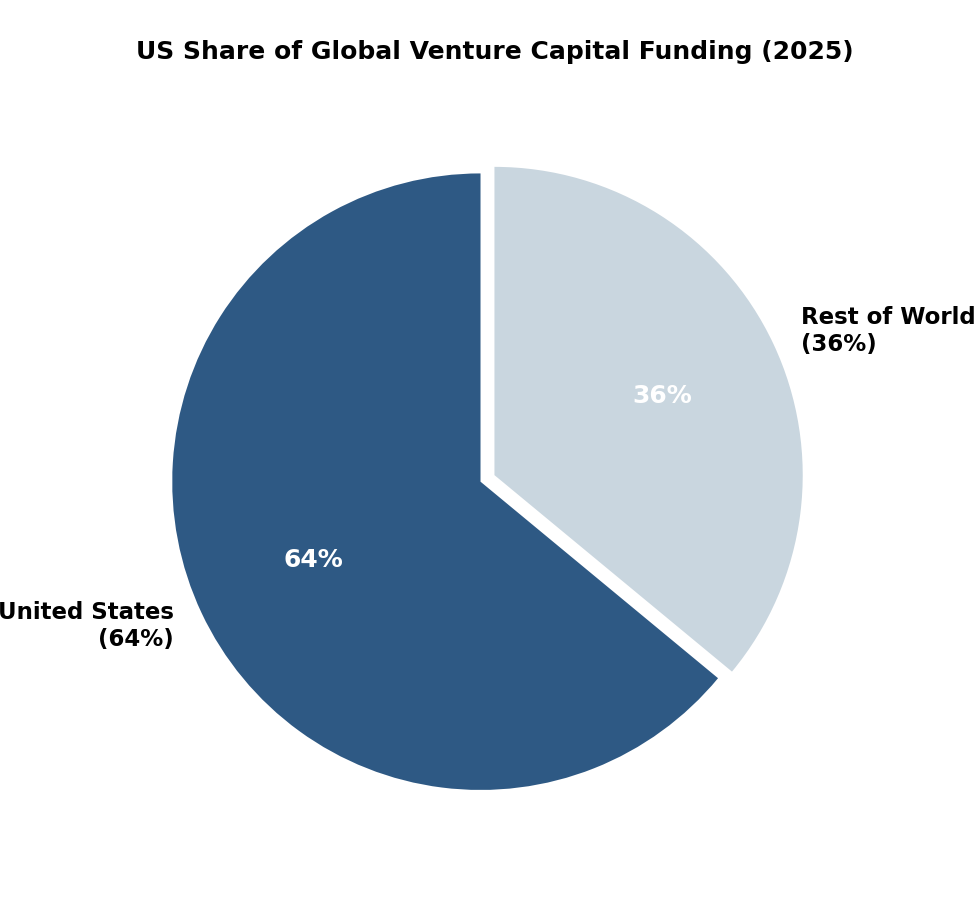
The United States continues to command roughly two-thirds of global venture funding, reinforcing why so many founders — domestic and international — target US VC Firms specifically when raising a round.
How Founders Should Approach This List
Treat this ranking as a starting point, not a checklist to blast simultaneously. A warm introduction from a founder, advisor, or existing investor will outperform a cold email to any of these firms nearly every time. Research each partner’s recent investments before reaching out — most funds publish portfolio pages, and matching your pitch to a partner’s actual thesis dramatically improves response rates.
It’s also worth sequencing your outreach. Many founders start with firms like Y Combinator or First Round Capital that specialize in first checks, then use that momentum — and the resulting investor introductions — to reach larger multi-stage US VC Firms for follow-on rounds. Trying to skip straight to a firm writing $10M+ Series A checks without any seed traction rarely works, regardless of how strong the underlying idea is.
Why This Matters for Investors and Researchers Too
It isn’t only founders who track this list. Limited partners, corporate development teams, and journalists covering the venture market use the same data to spot which firms are gaining share, which sectors are attracting the most capital, and where the next wave of category leaders might come from. Understanding fund structures, check sizes, and AUM trends gives a clearer picture of where institutional conviction is concentrated heading into the second half of 2026.
Final Thoughts
The early-stage funding environment in 2026 rewards founders who do their homework. The most active US VC Firms aren’t interchangeable — each has a distinct thesis, check size, and support model, and matching your company to the right partner matters as much as the size of the check. Use this list as a research starting point, dig into each firm’s recent deals, and prioritize warm introductions over cold outreach wherever possible.
Frequently Asked Questions
Which US VC firms write the smallest first checks? Y Combinator, First Round Capital, and similar seed-focused funds typically write the smallest initial checks, often starting well under $500,000.
Do these firms only invest in AI startups? No. While AI captured a large share of 2025 funding, all ten firms listed continue to back companies across SaaS, fintech, healthtech, consumer, and deep tech.
How do I get a warm introduction to a top VC? Existing portfolio founders, accelerators, angel investors, and lawyers who work with venture-backed startups are the most reliable sources of warm introductions.